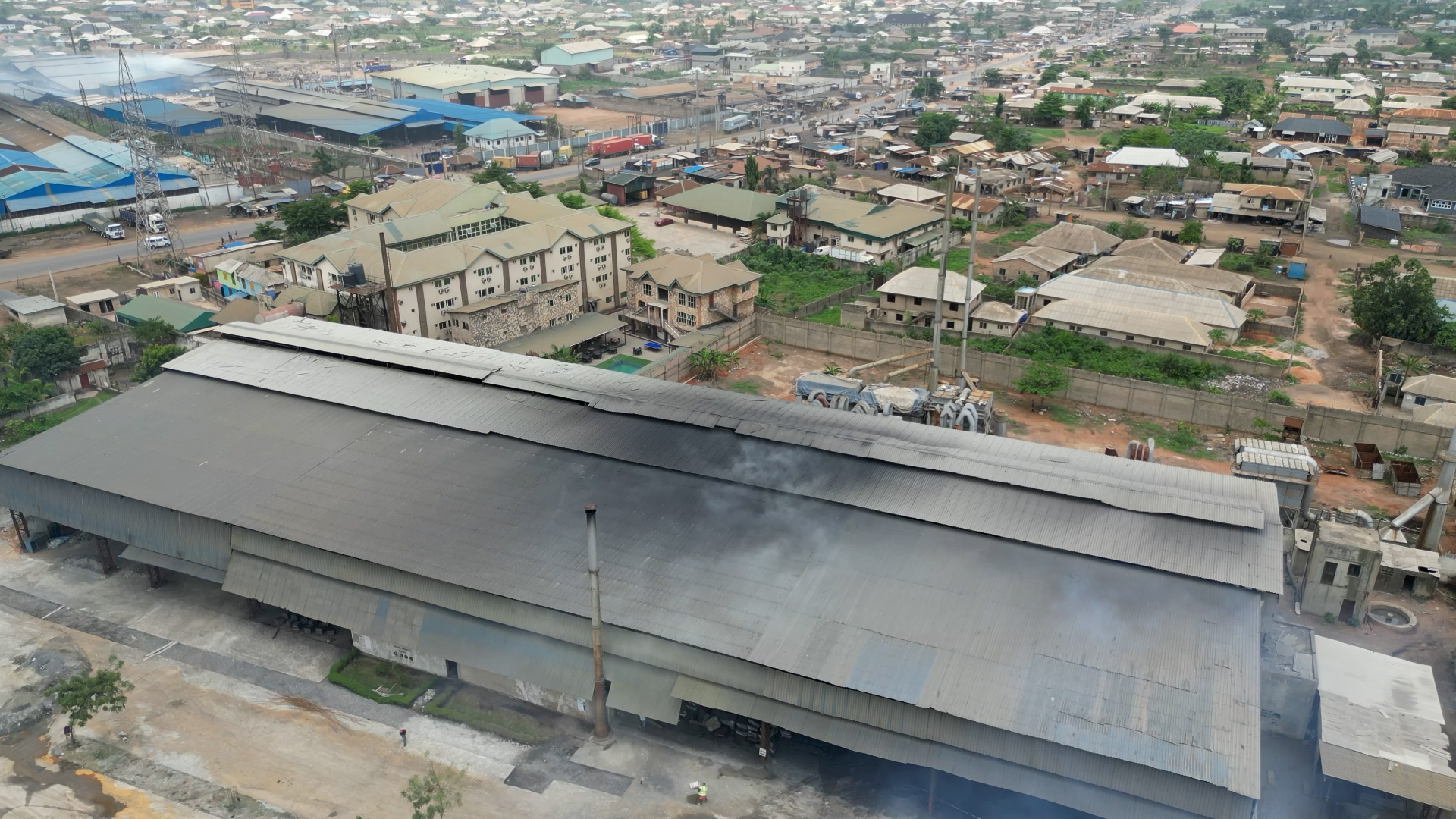
Around 10 a.m. on the sunny Friday morning of 17 September, about 30 residents of Ogijo, a sprawling industrial community in Sagamu LGA, which lies on the border of Lagos and Ogun State, gathered at the Ogijo Health Centre to collect the results of their Blood Lead Level (BLL) test. As the sun baked the skin with mild intensity, they trickled into the community health facility, some with their children in tow. Tension filled the air as the residents clustered in groups to discuss their fate in subdued voices.
Months earlier, in July, their blood samples had been drawn to check for traces of lead through BLL, which refers to the concentration of lead in a person’s blood, measured in micrograms per decilitre (image.png), to assess lead exposure and its health risks. Now, the results would reveal whether the dust and smoke emitted by lead recycling companies in the Ogijo community had poisoned them.
53-year-old Thomas Ede and his three children, all under the age of 11, were among the 70 Ogijo residents whose blood samples had been drawn for testing. Mr Ede, a single father, lives 500 metres from True Metals Nigeria Limited, one of the companies that recycle used batteries for lead export in Ogijo.
For over 15 years, Mr Ede had called the Ogijo community home, long before True Metals began operations in the community. But about a decade ago, when the company began operations, he observed as thick black smoke from the factory’s chimneys travelled through the skies and settled daily on every possible surface, rooftops, crops, clothes, and even cooking pots. Lately, he had begun to fear that the pollution from True Metals and similar factories in the area had seeped into his family members’ bodies.
A drive around Ogijo reveals the vulnerability of its environment through the smell in the air. During the day, the atmosphere feels heavy, as if every breath carries a film of dust. At night, residents say the smoke burns their throats and leaves a bitter taste that lingers till the next morning. These recycling factories, once symbols of job opportunities and communal progress, have become agents of quiet destruction, poisoning the soil, air, and people of Ogijo.
At the community health centre, lines of worry cut across Mr Ede’s face as he sat amid a small crowd, waiting to be called.
Hours later, his name was re
Continue Reading on Premium Times Nigeria
This preview shows approximately 15% of the article. Read the full story on the publisher's website to support quality journalism.