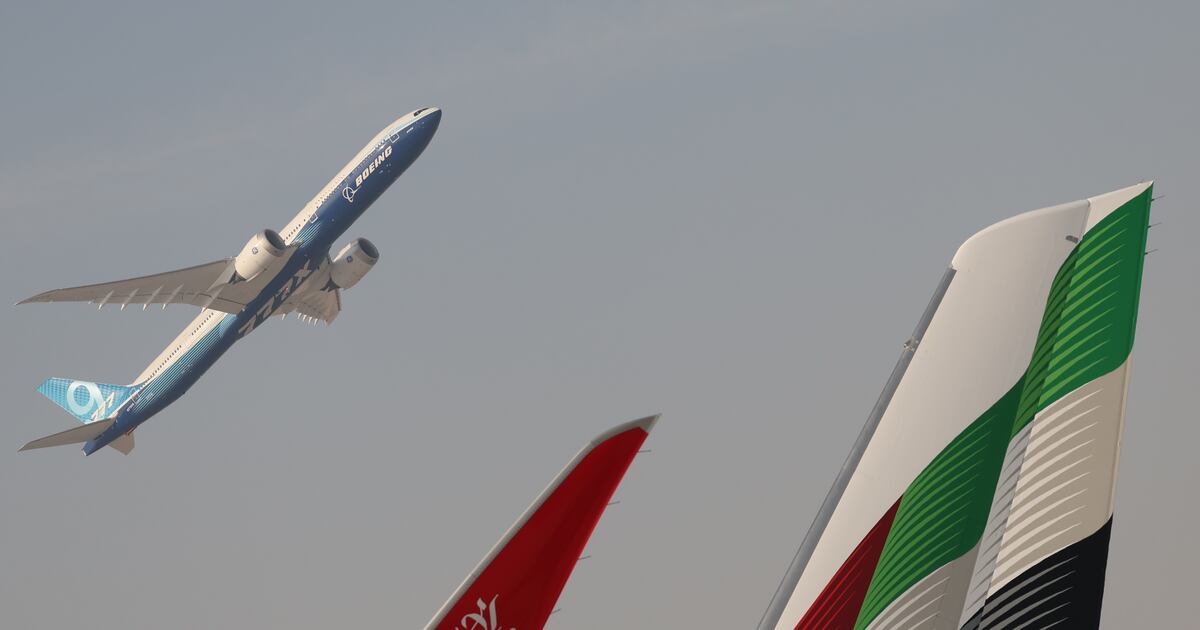
As the Dubai Airshow came to a close, a picture had emerged of a Gulf aerospace industry pivoting from being a consumer to an industrial force, taking control of its future.
Airlines in the region are leveraging their large order books to exert influence on the future of aircraft design, as they transform from mainly buying jets to manufacturing and exporting key products.
That signal was loud and clear on the first day of the biennial event on Monday.
As Emirates airline ordered another 65 Boeing 777-9 jets, cementing its position as the world's largest buyer of wide-body aircraft, the US plane maker agreed to conduct a feasibility study for a larger version to meet the airline's growth requirements.
“The Dubai Airshow signalled a definitive paradigm shift, moving beyond the traditional 'shopping mall' mentality to resemble a complex strategic chessboard,” Dean Mikkelsen, an independent aviation and security analyst, told The National.
“We are witnessing a maturation of the market where regional carriers are utilising their immense purchasing power not merely to secure inventory, but to dictate the industrial trajectory of original equipment manufacturers [OEMs].”
The Gulf aerospace industry is undergoing a strategic shift, taking its fate into its own hands and reducing reliance on global supply chains that have been faltering since the pandemic and slowing expansion plans.
“This year made it clear that the era of passive off-the-shelf procurement is ending; in its place is a new reality where the Gulf demands deep industrial participation, forcing manufacturers to adapt to the
Continue Reading on The National UAE
This preview shows approximately 15% of the article. Read the full story on the publisher's website to support quality journalism.