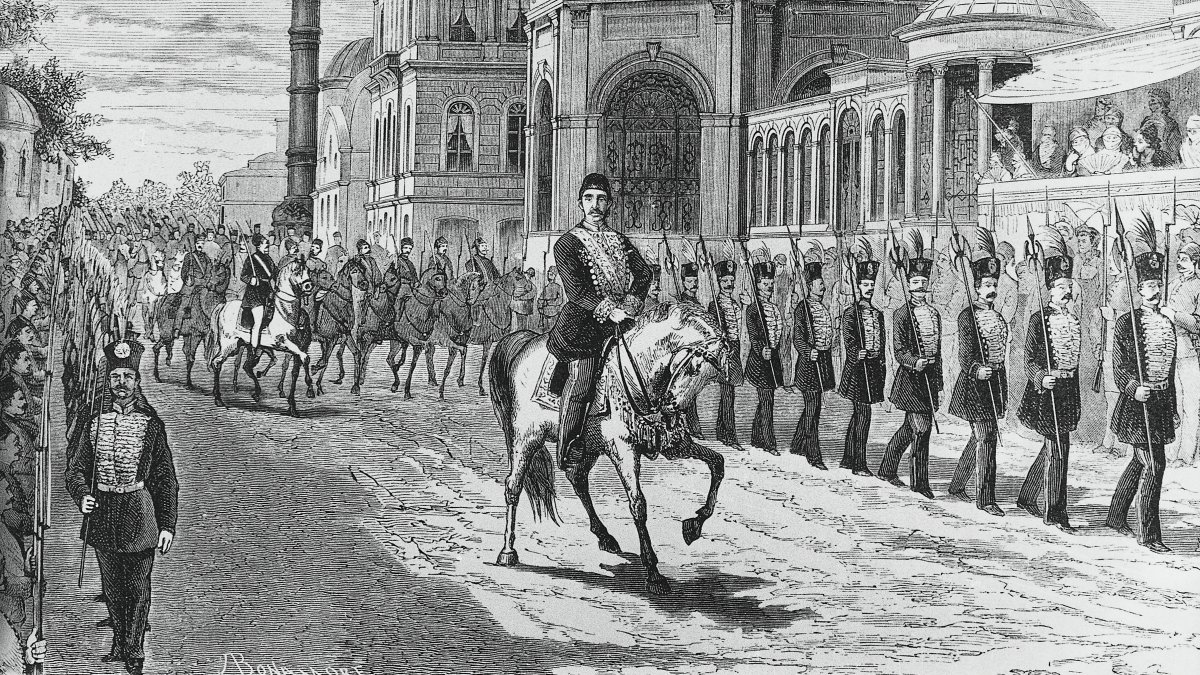
Despite facing extensive criticism, Ottoman Sultan Abdülhamid II played a crucial role in the transition to the republic. On the one hand, through his investments, new projects and political strategies, he slowed the long-standing territorial and geopolitical decline of the Ottoman Empire against Europe, buying valuable time. On the other hand, he launched a vast investment initiative – from education to communication, from transportation to all forms of infrastructure – that made it possible to envision a new beginning. For the first time, Anatolia encountered comprehensive investments such as educational institutions, hospitals, postal and telegraph lines, railways and clock towers during Abdülhamid’s reign. Had it not been for his efforts, the Ottoman Empire could not have endured as long as it did, nor would it have been possible to establish the new republic with its necessary human capital and foundational investments.
The “Tribal School" ("Aşiret Mektebi") project was also one of Abdülhamid II’s significant initiatives in this context. In his book "Aşiret Mektebi: Osmanlı Eğitim Tarihinde Bilinmeyen Bir Girişim" (“The Tribal School: An Unknown Initiative in Ottoman Educational History”), Mehmet Ali Neyzi sheds light on this lesser-known but important project – its purpose, the students who attended, the tribes of the Ottoman geography, and the career paths and life stories of its graduates.
As Neyzi notes, Abdülhamid II attached special importance to strengthening Ottoman-Arab relations as part of imperial recovery: “In this new world, the Sultan und
Continue Reading on Daily Sabah
This preview shows approximately 15% of the article. Read the full story on the publisher's website to support quality journalism.