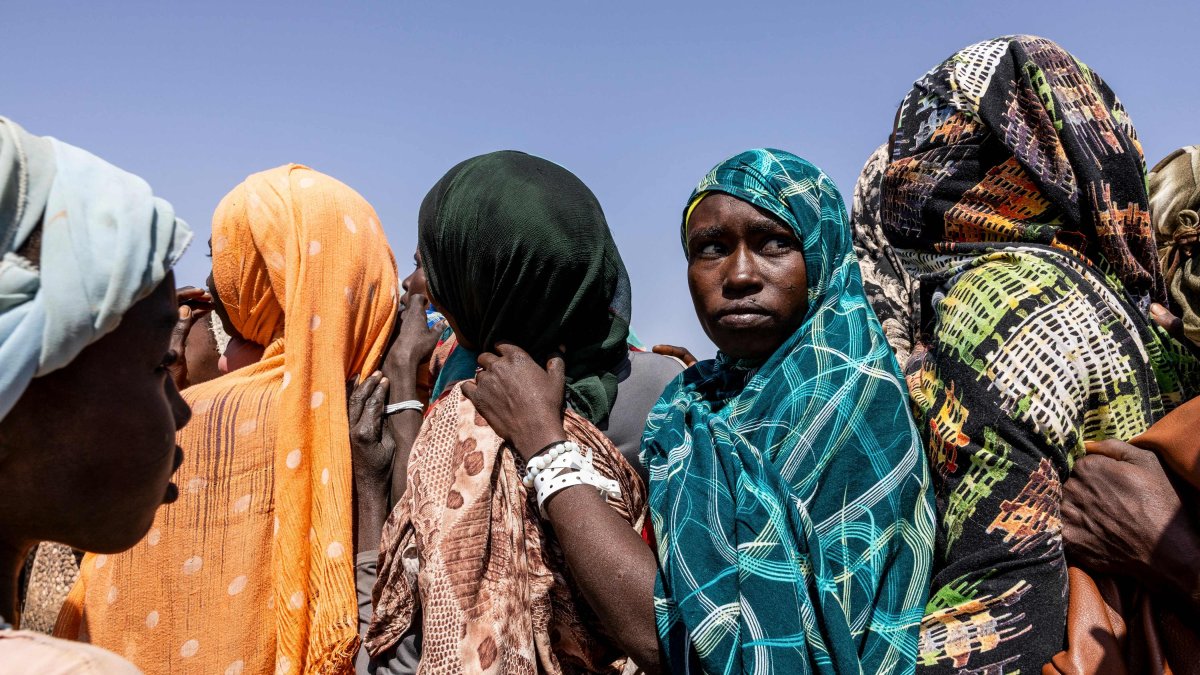
Sudan’s 19-month war between the Sudanese Armed Forces (SAF) and the paramilitary Rapid Support Forces (RSF) has entered its most dangerous phase yet. With el-Fasher falling to the RSF, Khartoum partially reclaimed by the army, and international actors deepening covert involvement, analysts say the conflict is no longer a contest for political power alone but a fight that could redraw Sudan’s borders altogether.
The country has now become a rapidly deteriorating landscape where military gains, international legitimacy, and geopolitical rivalries are pulling it toward the risk of a protracted and de facto partition, according to researchers Kaan Devecioğlu and Tunç Demirtaş.
Speaking with Daily Sabah, they described Sudan's recent battlefield developments and diplomatic dynamics, painting a picture of a conflict that is intensifying and becoming harder to resolve.
Shifting battle lines
The past six months have fundamentally altered the balance between the warring parties – not only because of battlefield outcomes but because each side has begun constructing rival state structures.
Devecioğlu argues that recent army-backed gains – particularly the recapture of most of Khartoum, as well as key cities in Kordofan – have created “a noticeable military and psychological advantage on the ground.” But he cautions that the RSF has responded by building a political alternative, “the RSF has formed a parallel government in
Continue Reading on Daily Sabah
This preview shows approximately 15% of the article. Read the full story on the publisher's website to support quality journalism.