If Fyodor Dostoevsky wrote in The Brothers Karamazov that “God and the Devil are fighting and the battlefield is the heart of each man,” today we could paraphrase the Russian author: the far right and progressivism are in constant conflict across the globe and the battlefield is each person’s mind. Figures such as Donald Trump, Jair Bolsonaro and Javier Milei dominate the political landscape, yet they are increasingly countered from the left by figures like Zohran Mamdani, Bernie Sanders, Jean-Luc Mélenchon, or the leaders of Die Linke in Germany.
In the middle, traditional parties are creaking and disruptive figures are emerging inside and outside the established structures, each playing by their own rules. In Argentina, perhaps the clearest national example is Juan Grabois who, burdened by Kirchnerism, was crushed politically; and at the local level, Juan Monteverde in Rosario. Milei himself has reacted to this phenomenon: on his most recent trip to the United States, in Miami, he referred to the so-called “Riesgo Kuka” or “risk of socialism,” targeting Mamdani in particular, whom he accused of being a wolf in sheep’s clothing.
In the United Kingdom, a kind of ‘English Mamdani’ has emerged: a figure as atypical as he is striking and compelling, seeking to respond to the same problems as Mamdani with similar solutions: low wages, drawing attention to precarious work, high-living costs and housing problems, which can be addressed through taxing the rich, along with environmental concern for climate change.
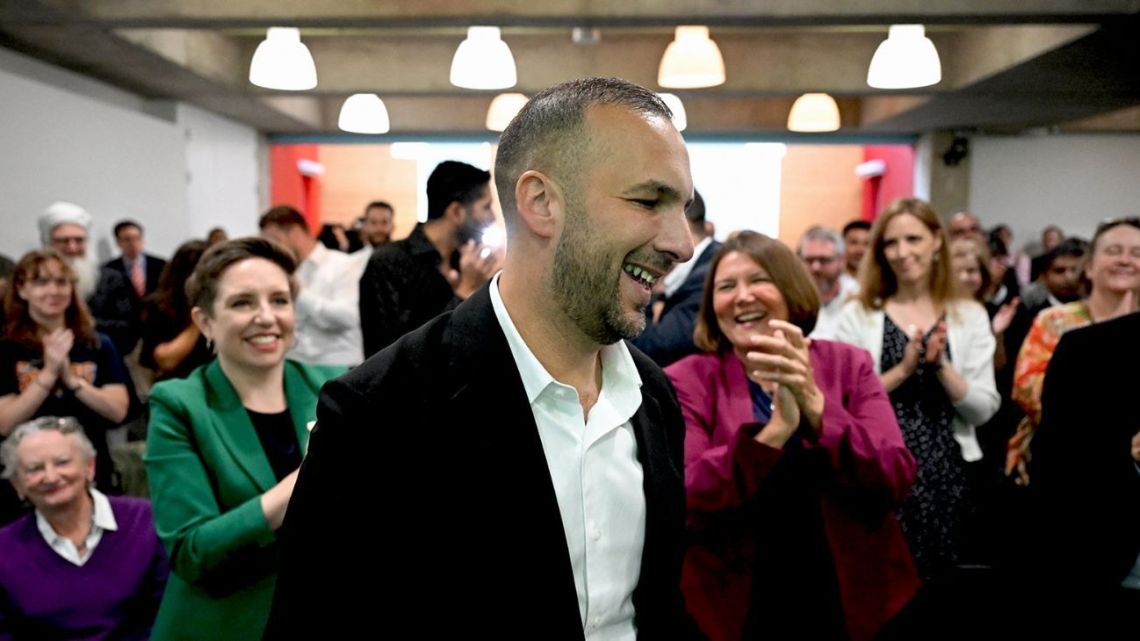
Zack Polanski – an environmental activist, gay, vegan and former actor – may appear to be a sort of woke caricature invented by the far right, but he is gaining traction among young voters and is now making the UK’s Labour Party anxious. At this very moment, the ruling party sees Nigel Farage’s far right advancing – it now also sees its support trimmed by Polanski. Why is this growth from two new parties – one far-right and one “ecosocialist” – shaking the world’s oldest two-party system?
At heart, many Britons – particularly those in the industrial North, in Wales, in the Midlands and across much of Scotland – feel that quality of life never returned to pre-Thatcher levels. And this is not abstract: it is reflected in concrete indicators that have accumulated since the 1980s. Margaret Thatcher closed mines, steelworks, shipyards and entire industrial ecosystems.
The official story was that the country was being “modernised,” but in practice those regions never again produced high-quality employment. Tony Blair, far from reversing it, merely managed the situation with palliative measures. For those communities, the idea of “living well” (stable wages, strong unions, affordable housing, reliable public services) died in that era. The English industrial North mirrors the American Rust Belt, that abandoned industry that propelled Trump to power, despite his industrial policy being the opposite of Milei’s or Thatcher’s.
Continue Reading on Buenos Aires Times
This preview shows approximately 15% of the article. Read the full story on the publisher's website to support quality journalism.