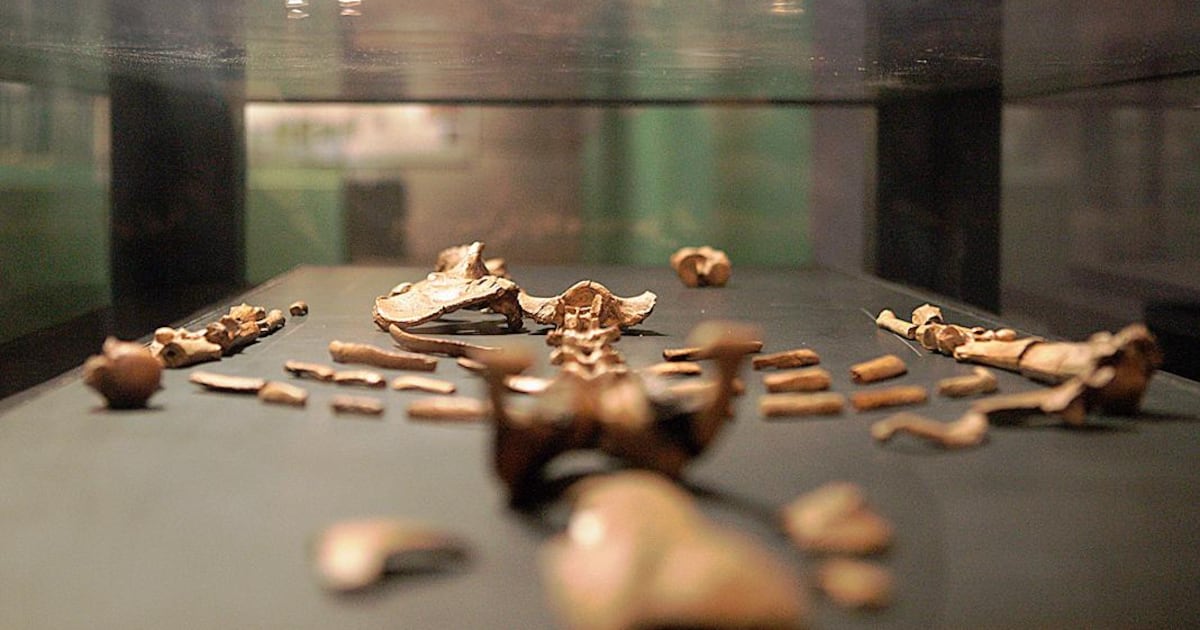
Lucy, the famed 3.2-million-year-old fossil that transformed scientific understanding of humanity’s origins, has been placed on display at the Natural History Museum Abu Dhabi.
The fossil preserves about 40 per cent of the skeleton of an early human ancestor. She was found at the Hadar site in Ethiopia’s Afar region in 1974 by a team led by American palaeoanthropologist Donald Johanson, and has remained a scientific and cultural fixture ever since. The Guardian has referred to her as the “mother of humanity”.
Lucy is displayed alongside a reconstruction of what she may have looked like in The Human Story, one of the museum’s galleries. She is on loan to the museum courtesy of the Ethiopian Heritage Authority.
The fossil has offered several insights into early humanity over decades of study. Features of her pelvis, femur and spine provided early evidence that Australopithecus afarensis walked upright, helping clarify when bipedalism first emerged in human evolution.
A model of Lucy, the world’s oldest and most renow
Continue Reading on The National UAE
This preview shows approximately 15% of the article. Read the full story on the publisher's website to support quality journalism.