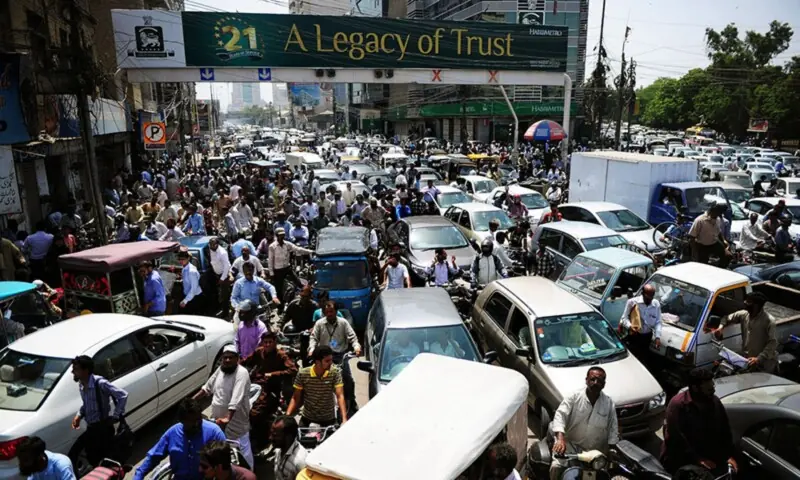
Population growth, when unaccompanied by strong human development, traps an economy in a cycle of low productivity and low investment.
It is good to see that the Dawn Media Group has launched a much-needed discussion around population and its implications. A broad-based debate on population and its social, economic and development implications is largely missing.
It is striking that (macro)economists—who rigorously examine growth, employment, public finance, investment, productivity, and long-run development—rarely write about population.
The subject is often delegated to demographers, as if population has nothing to do with the economy. This flawed separation originates from valuing population quantity over quality.
Ignoring population means overlooking one of the most powerful structural forces shaping a country’s development trajectory.
Population size, its rate of growth, and the changing demography vis-à-vis available resources shape the quality of the population, which has broad implications for social, developmental and economic outcomes.
To begin with, population growth directly determines the scale at which a country must plan and govern. A high population base, combined with rapid growth—say, doubling every 30 years—dramatically alters resource demand and the developmental landscape.
Pakistan provides a vivid example.
Continue Reading on Dawn
This preview shows approximately 15% of the article. Read the full story on the publisher's website to support quality journalism.