Listen to this article
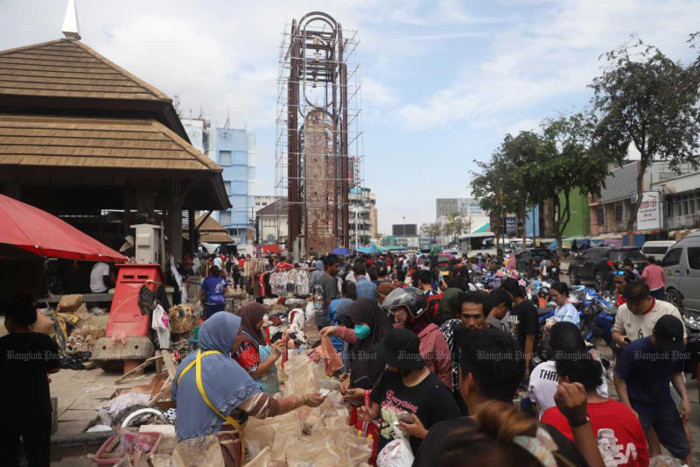
Residents receive halal food from volunteers in central Hat Yai district, Songkhla, post-flood. In the early stages, halal food was scarce since most donated meals lacked halal certification, leaving Muslim residents unable to consume them. Nutthawat Wichieanbut
Entrenched patronage networks, political meddling in appointments, and a lack of professional disaster-management leadership created a cascade of preventable failures in the catastrophic flooding that tore apart Songkhla's Hat Yai district, a major economic engine of the South, according to academics.
Experts warn that while climate-driven extreme weather is intensifying, local leaders and the central government continue to misjudge risks, rely on outdated assumptions, and respond with ad-hoc, election-minded decisions rather than evidence-based strategies.
Phichai Ratnatilaka Na Bhuket, director of the Politics and Development Strategy Programme at the National Institute of Development Administration (Nida), said the failures stemmed from two overlapping power structures: local authorities tied closely to national political networks, and central control exercised through politically driven transfers by the prime minister and interior minister.
"These two power nodes reinforce a patronage system that prioritises electoral advantage over professional competence," Assoc Prof Phichai said.
He said provincial governors and municipal leaders are often appointed through alliances within "bi
Continue Reading on Bangkok Post
This preview shows approximately 15% of the article. Read the full story on the publisher's website to support quality journalism.