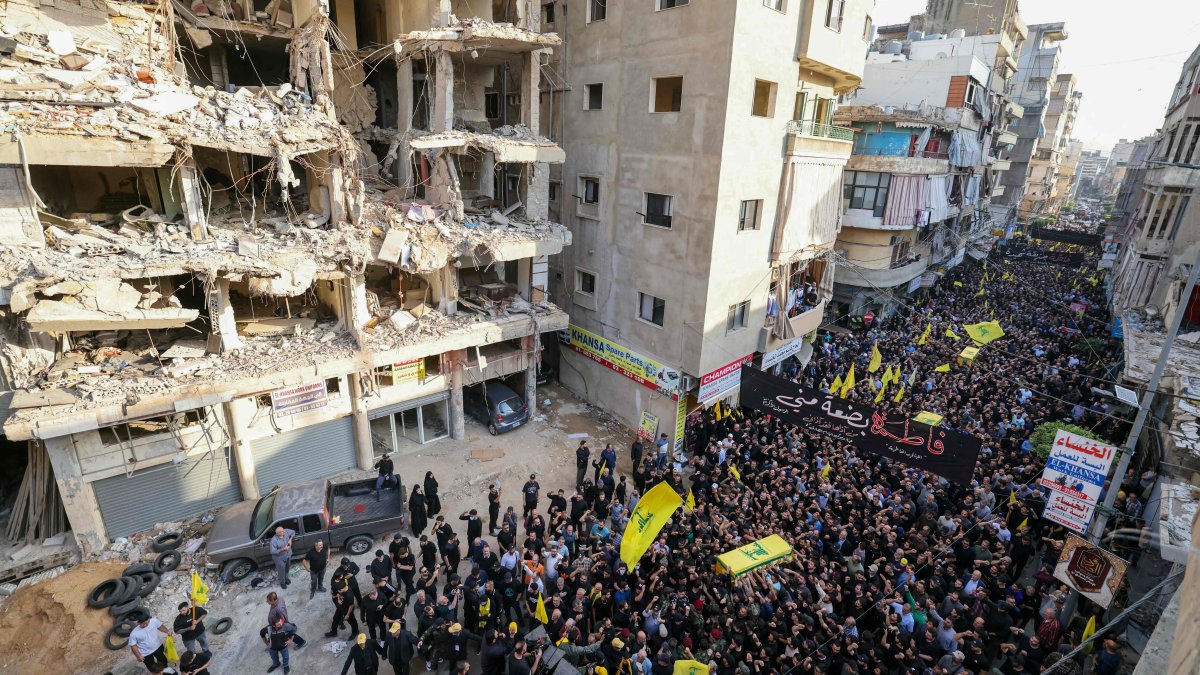
Lebanon is once again standing on the edge of a new war scenario with Israel, and this time the danger appears far more structural than episodic. On the one hand, the disarmament agenda targeting Hezbollah is being pushed aggressively through diplomatic pressure led by the United States and its regional allies; on the other, Israel continues to transmit direct military threat messages through daily cease-fire violations, targeted assassinations and the expansion of its operational geography.
The latest assassination of senior military commander Haytham Ali Tabatabaei was not merely an isolated security incident; it was a deliberate demonstration that Israel does not treat the cease-fire as a binding framework, but rather as a tactical pause to shape the next phase of escalation. Tel Aviv’s strategy is not oriented toward stabilizing the status quo, but toward exploiting the current balance of weakness to prevent Hezbollah from reemerging as a lasting deterrent force. In this sense, the objective is not mutual deterrence through restraint, but deterrence through structural incapacitation.
Alongside military pressure, diplomacy itself has taken on a more assertive character. Egypt has recently emerged as one of the key actors conveying this pressure. Following earlier mediation efforts led by intelligence chief Hassan Rashad, Egyptian Foreign Minister Badr Ab
Continue Reading on Daily Sabah
This preview shows approximately 15% of the article. Read the full story on the publisher's website to support quality journalism.