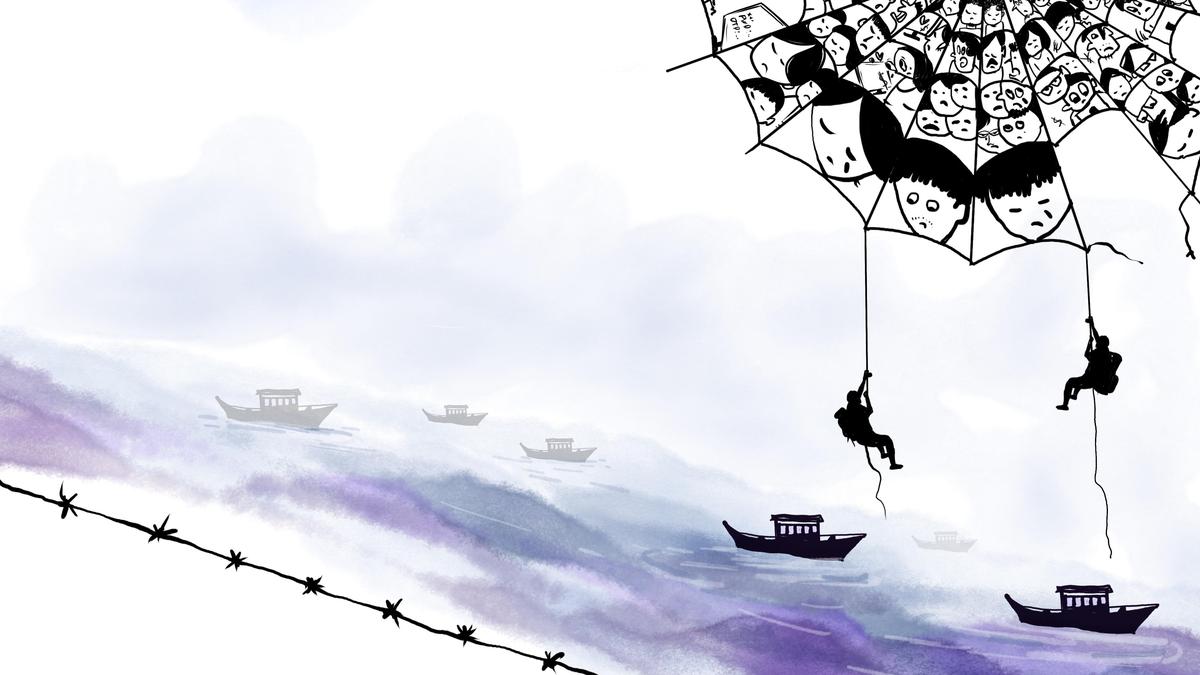
Nine months after his return, Jignesh (name changed to protect privacy) still wakes up thinking he’s in the compound. The 23-year-old son of a security guard from Ahmedabad had set out for Bangkok on December 8, 2024, for what he was told was a call-centre job. He believed he was joining a growing stream of young Indians seeking work abroad, hoping to earn enough to give their families a better life.
Instead, he was trafficked into Myanmar, labelled an illegal immigrant, and forced into a sprawling cyber-slavery network that has turned thousands of Indian jobseekers into unwilling cogs in the wheels of global fraud operations in recent years.
“By the time I realised what was happening, I was taken into a guarded compound in Myanmar, crossing the river border illegally, and into the machinery of a cyber-fraud empire where Indians, Pakistanis, Chinese, Africans, and people from other developing countries were held captive and trained to deceive strangers for profit,” he says.
“At night, I still wake up thinking about life in that compound in Myawaddy (a town in southeastern Myanmar). We were real slaves, not employees, waking up every day to cheat people online,” Jignesh says, looking at his friend who was also trafficked to Myanmar via Thailand.
In 2025, two batches of people have been rescued and sent back to India from Thailand-Myanmar cyber slavery: Jignesh and some others in March, and another batch of 465 Indians, of which 64 were from Gujarat, in October. The international operations are coordinated with the Indian Cyber Crime Coordination Centre (I4C) and the Ministry of Home Affairs.
Cyber slavery is a trafficking model in which recruits, lured
Continue Reading on The Hindu
This preview shows approximately 15% of the article. Read the full story on the publisher's website to support quality journalism.