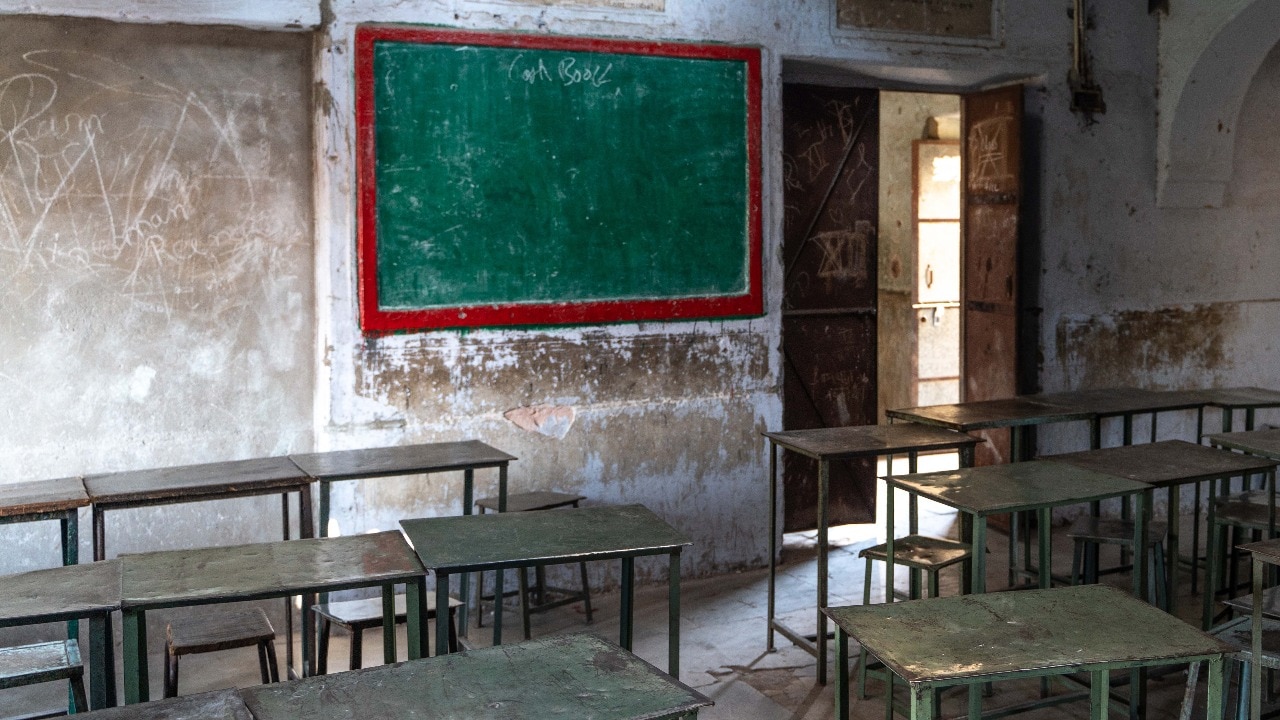
On paper, they are schools. The buildings stand in small towns and even cities across India, with signboards intact, teachers posted, and funds are allocated.
But on the ground, many of these are just unused rooms with no children at all.
Fresh government data presented in Parliament has revealed a troubling truth: 5,149 government schools across India had zero students in the 2024–25 academic year. Not a single child was enrolled in them.
advertisement
That number comes from a total of 10.13 lakh government schools in the country. On its own, it sounds alarming. But what makes it more unsettling is where these empty schools are located.
According to the same data, around 70 per cent of these zero-enrolment schools are concentrated in just two states — Telangana and West Bengal.
Put another way, thousands of “ghost” schools are not evenly scattered across India; they are concentrated in districts and pockets where the system’s assumptions about children, classrooms and community no longer hold.
WHAT THE DATA REALLY SHOWS, AND WHY 2 STATES DOMINATE
India has over 10.13 lakh government schools in 2024–25. Out of these:
5,149 schools have zero students
65,054 schools have fewer than 10 students
1.44 lakh teachers are posted in schools with zero or near-zero enrolment
The number of government schools with less than 10 or zero students has ballooned from 52,309 in 2022–23 to 65,054 in 2024–25, a rise of 24 per cent.
This is not a small administrative glitch. It points to a system where schools, teachers and children are no longer aligned.
It is a policy failure at three levels: planning (where schools are located), quality (why parents avoid them) and governance (why empty schools remain on the rolls).
In some places, schools exist but children don’t come, while in others, children exist but schools a
Continue Reading on India Today
This preview shows approximately 15% of the article. Read the full story on the publisher's website to support quality journalism.