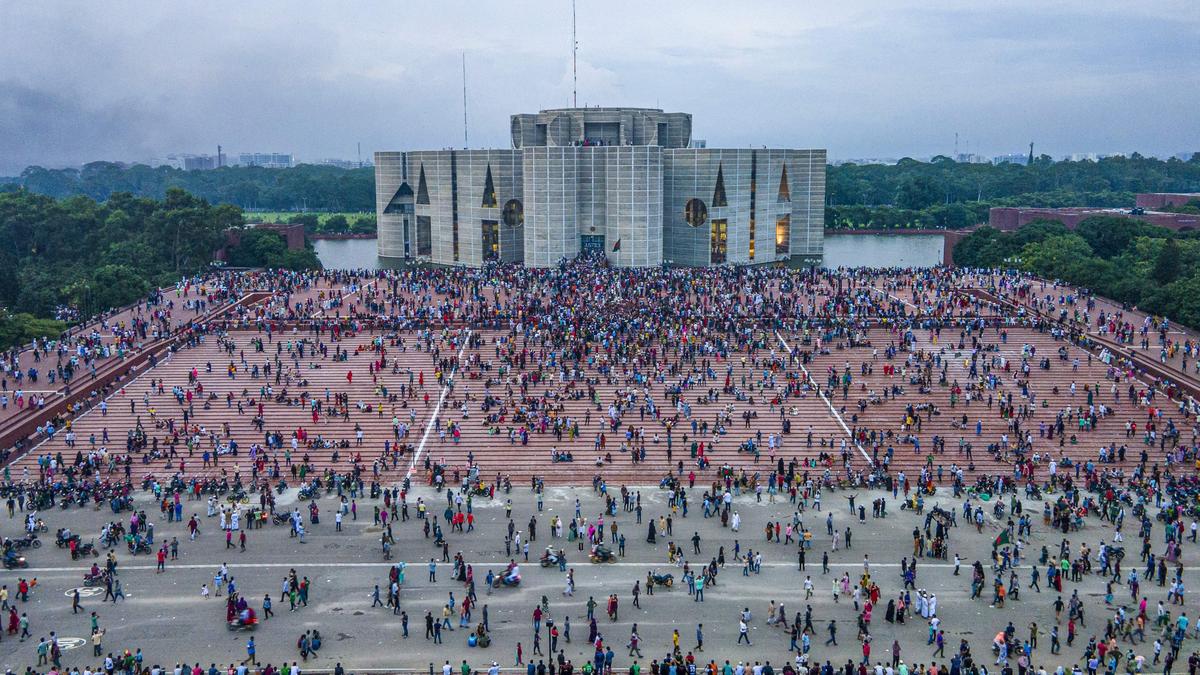
Bangladesh. A nation-state born out the faultiness of a discriminatory political fabric woven by the Pakistani military and political establishment amid Cold War tensions never embodied real hope for political pundits closely observing its violent birth. Cramped with more than 70 million people deeply entrenched in poverty within a deltaic region vulnerable to environmental disasters, its blood-soaked political independence in 1971 raised more questions than answers. Would this war-torn polity survive and prosper? Could it evolve into the liberal democracy as many aspired? Or would it join the list of newly independent nation-states which remained perpetually drowned in political and social conflict metamorphosing into a failed state? It was a difficult academic inquiry with no solid analytical foundation to guide it.
Moreover, while one might be tempted to think that what has been collectively attained or lost over the past five decades was inevitable, it is certainly not the case. History has walked a very specific path for us to stand on the existing pedestal we occupy today, and there is nothing preordained about it. The present state that we experience is one of the many possibilities that this nation-state could have attained. Bangladesh could have easily become a contested land and a dysfunctional disputed polity between India and Pakistan if our war of independence had taken a few wrong turns. Furthermore, even if we had achieved our independence, there was no certainty that this fragile war-torn polity could emerge into a nation-state that would attain meaningful socio-economic transformation, despite many obvious political failures.
Thus, Bangladesh’s chaotic developmental and political transformation and the critical juncture it has reached following the political transition on August 5, 2024 necessitate both an institutional and historical diagnosis to understand the forces at play, their evolution before and after independence, the political and economic choices that were made and their intended and unintended consequences. In effect, we need an approximate explanation of what went right and where things went wrong for us to comprehend the stakes for the country’s political and economic actors.
In this context, three key political and institutional issues require both reflection and scrutiny to gauge out a useful understanding of Bangladesh’s journey so far.
Continue Reading on The Hindu
This preview shows approximately 15% of the article. Read the full story on the publisher's website to support quality journalism.