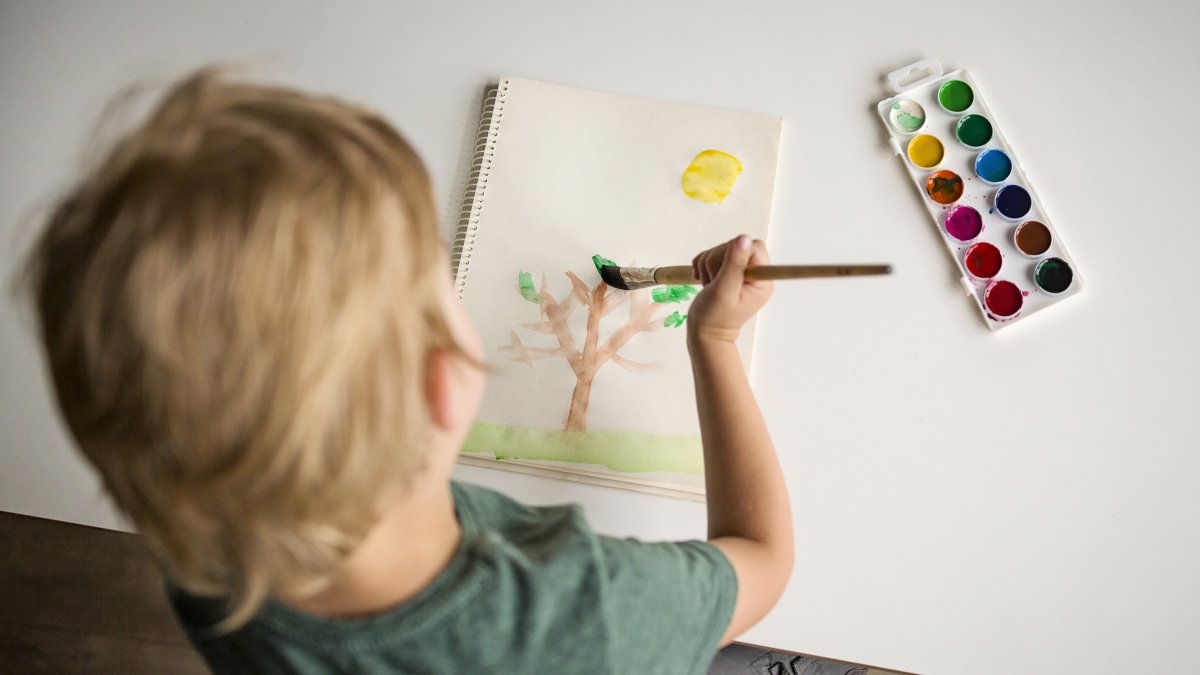
One of the most persistent misunderstandings about children and art is the belief that love for art is something that can be taught directly. Parents enroll children in painting classes, schools add “art hours” to curricula, museums design simplified tours and yet, despite all this effort, many children grow into adults who see art as distant, elitist or irrelevant. The failure does not lie in the lack of exposure, but in the way art is introduced: too early as a product, too late as a responsibility, and almost never as a lived experience.
Art consciousness does not begin with technique, terminology or historical dates. It begins with perception. Long before a child learns to draw a recognizable figure, they are already responding to rhythm, contrast, harmony, silence, color and form. Children experience the world aesthetically by default. The tragedy is not that children lack artistic sensitivity, but that adults systematically override it.
Permission, not instruction
To awaken a genuine love for art in children, one must first resist the impulse to instruct. Art consciousness is not built through correction but through permission. The child who paints the sky green is not mistaken. They are asserting authorship over reality.
Continue Reading on Daily Sabah
This preview shows approximately 15% of the article. Read the full story on the publisher's website to support quality journalism.