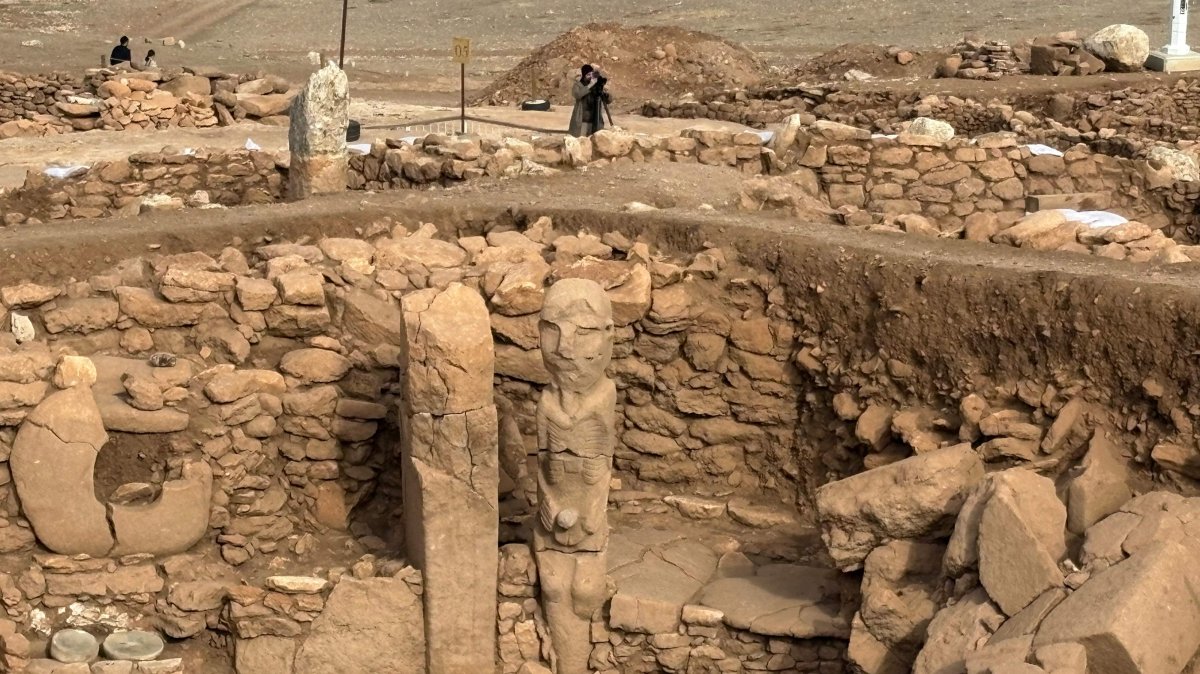
Excavations carried out across Türkiye in 2025 produced an exceptional range of archaeological finds, from humanity’s earliest symbolic artifacts to major discoveries from the Classical, Roman, Byzantine and medieval eras.
From prehistoric ritual centers in southeastern Anatolia to ancient cities along the Aegean and Mediterranean coasts, the year's discoveries shed new light on early belief systems, social organization, migration routes and urban life across millennia.
Here are all the major archaeological discoveries across Türkiye in 2025:
January
Excavations at the ancient city of Herakleia in Milas, in Türkiye's southwestern Muğla province, revealed mosaics at the base of a Roman bath - which locals had previously used as a stable - depicting crocodiles, dolphins, flamingos and eels.
The mosaics were uncovered in the bath's cold room, which archaeologists describe as the best-preserved Roman structure in the area.
Archaeological excavations in the ancient city of Assos, located in Behramkale, a village in the Çanakkale province, uncovered a 2,200-year-old mosaic and a 1,800-year-old monumental tomb.
The mosaic is among the earliest examples from the Hellenistic period in Anatolia and was likely part of a gymnasium, later converted into a residential area during the Byzantine era.
The tomb was identified as a heroon, a monumental burial structure for a prominent family in Roman-era Assos.
Izmir was also home to a remarkable discovery at the ancient city of Metropolis. Archaeologists unearthed nearly 2,000 bronze statue fragments that could reshape understanding of the site's past.
Found in an area believed to have functioned as an ancient junkyard, the pieces provide insight into cultural and religious transformations in the region during Late Antiquity.
February
Five sculptures from different periods were uncovered during excavations at the ancient city of Perge in Antalya.
Among the findings is an approximately two-meter-high (6.5-foot) statue of Aphrodite depicted with Eros riding a dolphin, which preliminary evaluations date to the 2nd century as a Roman imperial period replica.
Nearby
Continue Reading on Daily Sabah
This preview shows approximately 15% of the article. Read the full story on the publisher's website to support quality journalism.