From toxic rivers and a mega‑quake to floods, smog and elephant diplomacy, 2025 tested resilience, writes Apinya Wipatayotin
Listen to this article
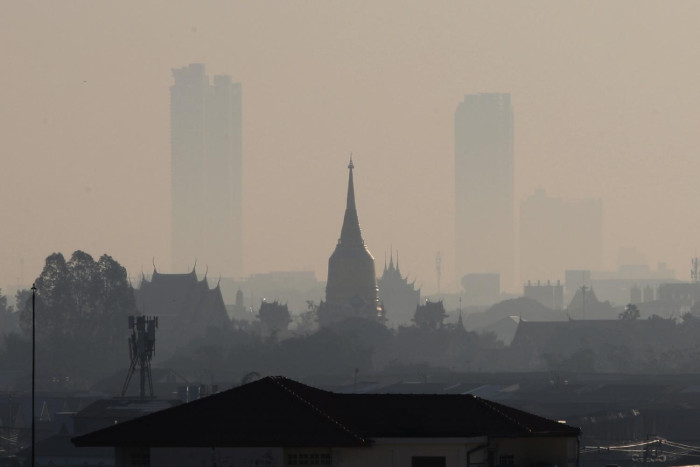
High PM2.5 levels in Bangkok on Dec 1 were due to a combination of low ventilation and agricultural burning, posing a risk to people with respiratory and heart concerns. (Photo: Pattarapong Chatpattarasill)
In 2025, Thailand faced a convergence of challenges that had laid bare its vulnerability to environmental degradation, natural disasters, and complex regional dynamics.
From polluted rivers and hazardous air quality to seismic disturbances, destructive floods, and sensitive diplomatic disputes, these developments have tested the nation's preparedness, governance, and capacity for cross-border cooperation. Together, they underscore mounting pressures on ecosystems, public safety, and national values amid an increasingly volatile regional landscape.
Toxic rivers shock
Northern Thailand is grappling with rising fears of cross-border pollution after high levels of arsenic and other heavy metals were detected this year in the Kok, Sai, and Mekong rivers, critical waterways that support millions of people in the region.
The alarm first sounded in March when residents along the Kok River noticed unusual discolouration in the water.
Tests conducted by the Department of Pollution Control (DPC) confirmed that arsenic levels had exceeded safe limits.
Chiang Mai Public Health Office and Chiang Mai Environmental and Pollution Control Office officials collect Kok River water samples for testing which revealed excessive levels of arsenic and lead in April.
Continue Reading on Bangkok Post
This preview shows approximately 15% of the article. Read the full story on the publisher's website to support quality journalism.