Subscribe here: Apple Podcasts | Spotify | YouTube
On this week’s episode of The David Frum Show, The Atlantic’s David Frum opens with his thoughts on the upcoming 250th anniversary of the signing of the Declaration of Independence. He examines the many actions President Donald Trump has taken that run counter to the ideals articulated in 1776, and considers how the Founders’ constitutional genius may ultimately be what frustrates Trump’s attempt to consolidate power.
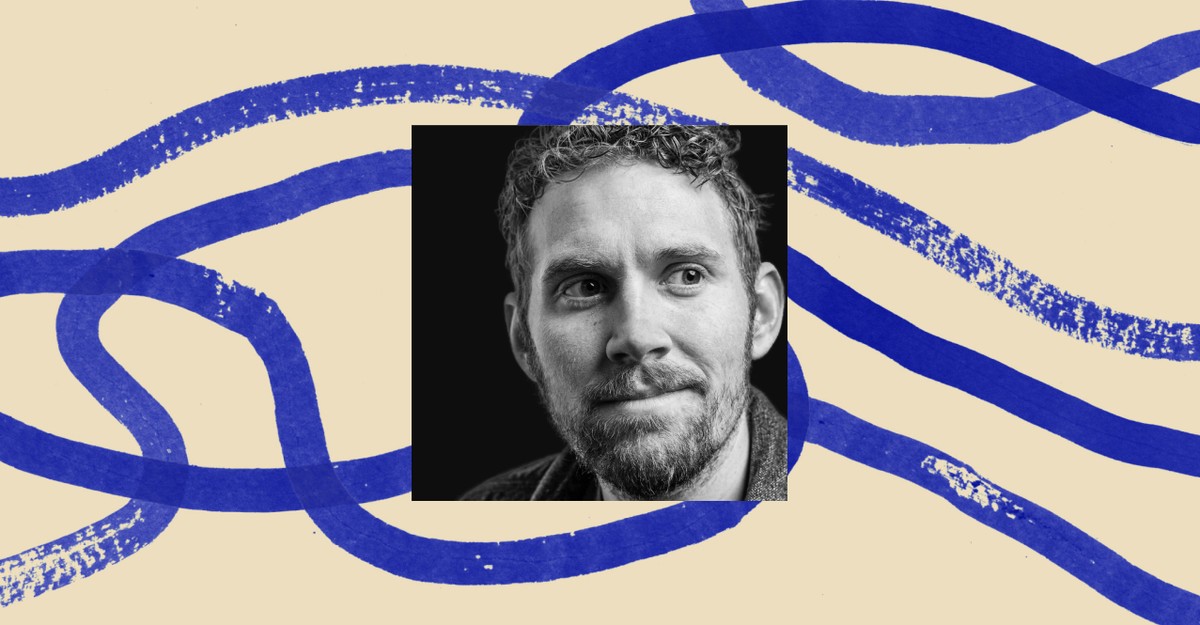
David is then joined by his Atlantic colleague Charlie Warzel, a staff writer and the host of the Galaxy Brain podcast, to discuss the temptations that come with launching a new podcast and the challenge of serving an audience that often rewards extreme content. Together, they talk about the responsibility that comes with hosting a podcast in a media environment that prizes clicks over truth. They also explore how conspiracy theorists have come to function as an alternate reality of “mainstream media,” and why the fight for truth may not yet be lost.
Finally, David closes with a discussion of Edward Berenson’s The Trial of Madame Caillaux and what it reveals about how future generations may come to view our own beliefs.
[YOUTUBE LINK]
The following is a transcript of the episode:
David Frum: Hello, and welcome to The David Frum Show. I’m David Frum, a staff writer at The Atlantic. My guest this week will be my Atlantic colleague, Charlie Warzel, the host of the Galaxy Brain podcast, and we’ll be talking about our experiences as new podcast hosts. We both launched podcasts this year. Some of the temptations, some of the dangers, and some of the lessons that we have learned from this year in podcasting. My book this week will be a 1992 history book, The Trial of Madame Caillaux, a study of a sensational sex and murder trial in pre–World War I France. But before getting to either of those things, I want to open with some end-of-year thoughts as we conclude 2025 and move into 2026. 2026, of course, is the 250th anniversary of the Declaration of Independence, in 1776, and is a powerful anniversary symbol in the American mind. As we move into this year, there are so many things that are going to be memorable and important and wonderful to celebrate. There are also some things happening that are really weird. One of the weirdest of them is a press release by the U.S. Mint just a few weeks ago. They are considering honoring the 250th anniversary of American independence with a set of commemorative, or dollar coins, featuring the image of President Donald Trump.
Now, it’’s not literally unprecedented for the United States to put living people on the coinage. It’s not even totally unprecedented for them to put living politicians on the coinage. The first dollar bill had the face of Salman Chase, Secretary of the Treasury in Lincoln’’s Cabinet, on the dollar bill. Salman Chase was a famous egomaniac. One of his contemporary colleagues in the Republican Party said, He’s an excellent man. I think that’s the quote. He’s an excellent man, but he’s got the delusion that the Christian Trinity has four persons in it instead of three, the fourth being Salman Chase himself. So it’’s not unprecedented. There may be other examples as well, but it is strange and shocking at any time for a living person, and especially a living president, to propose to put himself on the coinage of the money of the United States. And if a Founding Father saw that, I think they would be kind of startled. They would be more startled, however, at some more serious things that are happening.
Some things that actually, unlike the dollar coin, which is just a project, have already happened in the year 2025. We have seen the president of the United States impose taxes at his sole volition. The Trump Treasury Department issued a release a few days ago that boasted that they had collected $200 billion in tariffs over the year 2025. That’s $200 billion of taxes not authorized by Congress and a flagrant violation of the ideas and literal language of Article 1 of the Constitution, which puts both taxes and tariffs in the hands of Congress. The president and his team are proposing to spend that $200 billion. They’ve had many ideas about how to spend it. Maybe they should give the money to the farmers. Maybe there should be a tax rebate. Maybe they should do something else. But all of those ideas for spending or tax rebates, again, all of those are congressional authority that the president is arrogating to himself—something else that would have startled the founders of the country all those 250 years ago.
We’ve seen the growth of an enormous federal police force, ICE, which has recruited and seems to take orders not from any kind of institution of law but from, again, a small team around the president, an almost personal police force of a kind that the United States has not seen before, certainly not on such a scale. And carrying out actions that, again, would have seemed unimaginable only a little while ago. Mass roundups without any kind of due process; mass deportations. Deportation, of course, is a total presidential authority, but usually there’s some kind of hearing. And, of course, until now, you almost always—the deported person is sent back to the place the deported person came from, not to a third country to which they had no contact, and not under conditions that are tantamount to torture or at least serious human-rights abuse. You would send them home. It’s not a crime to be illegally present in the United States. It’s a violation of the law, but it’s not something that you should be tortured for. You should be put on a plane, given a hot meal, and warned, Don’t come back, you’re breaking the rules. We’ve seen the rise of presidential retaliation against media institutions using the regulatory apparatus of the state, regulatory apparatus that belongs to everybody, not just to him. And then using those same grants of threats, grants of regulatory favors or threats of the withholding of regulatory favors, to rearrange or redirect existing media companies to be more favorable to him, sometimes successfully, sometimes less so, but always with a kind of intent that would have seemed very sinister from the point of view of the founders of the American Republic. And we have seen, maybe most disturbing of all, the use of presidential war powers without any involvement of any kind of legal authority, any kind of congressional authority. We’re on the cusp, apparently, of some kind of military action against Venezuela—maybe airstrikes, maybe clandestine strikes of commandos, maybe something more. There’s no pretense that there’s any congressional authorization of that. And over the Christmas holiday, the president fired missiles into Nigeria, intervening in Nigerian civil strife, again, with no pretense of any kind of authorization by anyone other than the president at his own whim. So the big question for the year 2026 is: How far has the country drifted from those ideals of 1776 as formalized in the Constitution of 1787 and all the amendments afterwards? And how does the United States move back to the country it intended to be at the beginning, that Americans believed it to be until very recently, and that I think most Americans still want it to be.
Now, here’s some good news. It does seem like over the course of 2025, that these lawless actions have lost some of their impact and power. The bad guys seem to be losing a little political altitude as we move into 2026. I don’t want to be overconfident about that. I don’t want to issue false promises. But it does seem like the ebb and flow of political power is not favoring those who want to use arbitrary power in the way they’ve used it. Some examples: There does seem to be, in this second Trump term, a real loss of focus, an inability to keep the main thing the main thing. The battle over renaming the Kennedy Center the Trump Kennedy Center: That seems like a perfect example of something that any serious authoritarian president would not waste energy over. What does he care? He’s staffed it with his cronies. They’re going to do the shows that he likes; he’s gonna be able to blackball the people he doesn’t like. Does he really need to put his name on it? Does he need to host the Kennedy Honors on prime-time television? Is that really something that he needs to invest energy in? And even the dollar coins, that just makes enemies. Why are you doing that? What is the petty, pathetic need that makes you trade the substance of political power for these childish shows? But that need is there and it’s a political fact, and it’s an expensive political fact—and therefore for those who oppose the auth
Continue Reading on The Atlantic
This preview shows approximately 15% of the article. Read the full story on the publisher's website to support quality journalism.