Meet five new species discovered in 2025
toggle caption Alex Boersma
Even as some scientists search for signs of life beyond Earth, other researchers have been discovering new species on our own humble planet faster than ever before .
From high up in the mountains to the deep sea, take a tour across the world to meet five new species discovered in 2025.
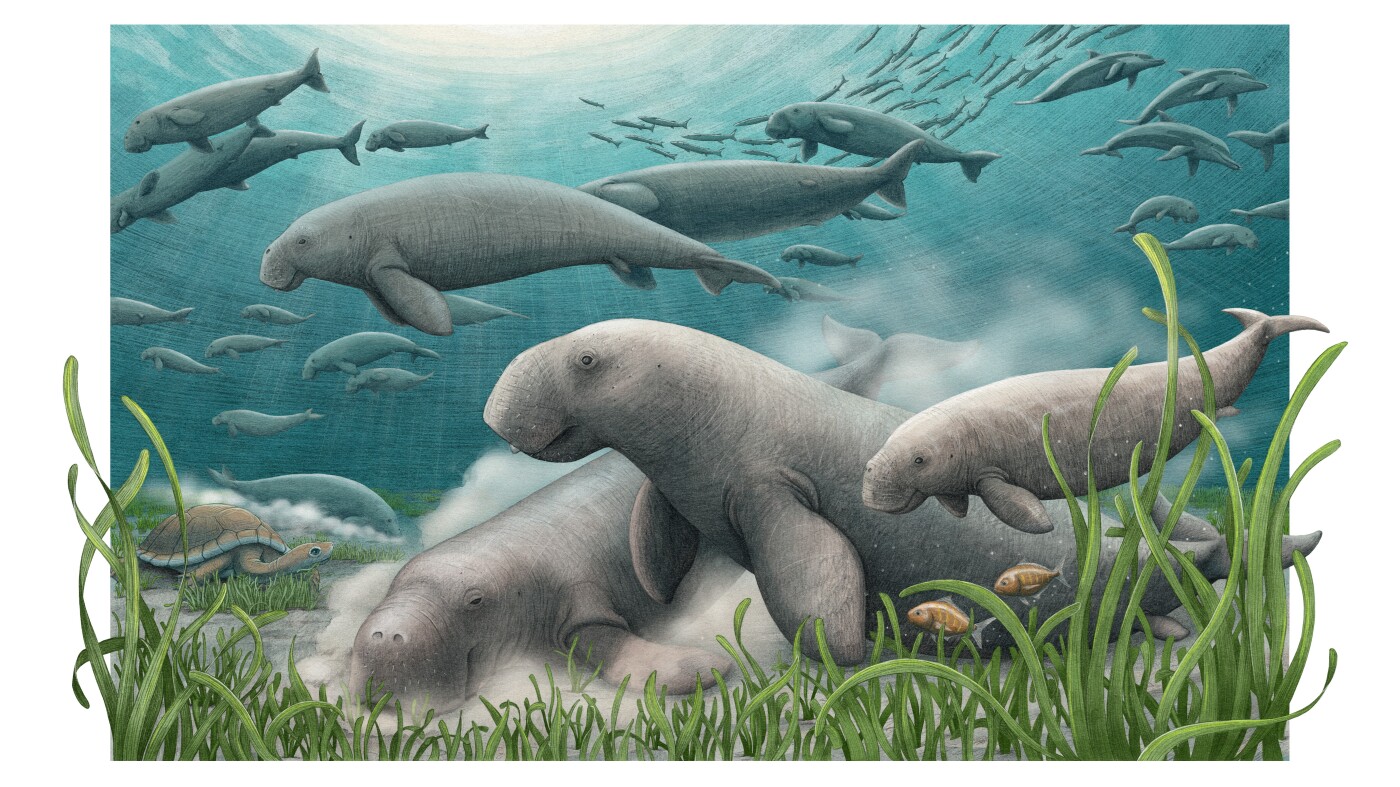
An ancient sea cow in the Persian Gulf
toggle caption Nicholas D. Pyenson/Smithsonian
Cows often get a bad rap for contributing to greenhouse gas emissions, but a newly discovered species of their ocean counterparts suggests that sea cows have been key contributors to a natural climate change solution for the past 21 million years.
Sponsor Message
This long-extinct sea cow's fossil remains were discovered in Al Maszhabiya, Qatar, which is now known to be the richest fossil sea cow deposit in the world. Like today's manatees and dugongs, it mainly grazed on seagrass and was considered an "ecosystem engineer" in the coastal waters of the Persian Gulf, where it primarily lived.
With their fleshy muzzles, these mammals would browse the seafloor, grab the plants, and use their tusks to snip the roots and eat them. In the process, they lift up nutrients from the seafloor that would otherwise be buried, which other animals in the ecosystem can use. These nutrients, in addition to the sea cow's excrement, help cultivate a healthier and more diverse ecosystem.
"Supporting seagrass communities through ecosystem engineering is a great natural climate solution, because seagrass communities store an
Continue Reading on NPR
This preview shows approximately 15% of the article. Read the full story on the publisher's website to support quality journalism.