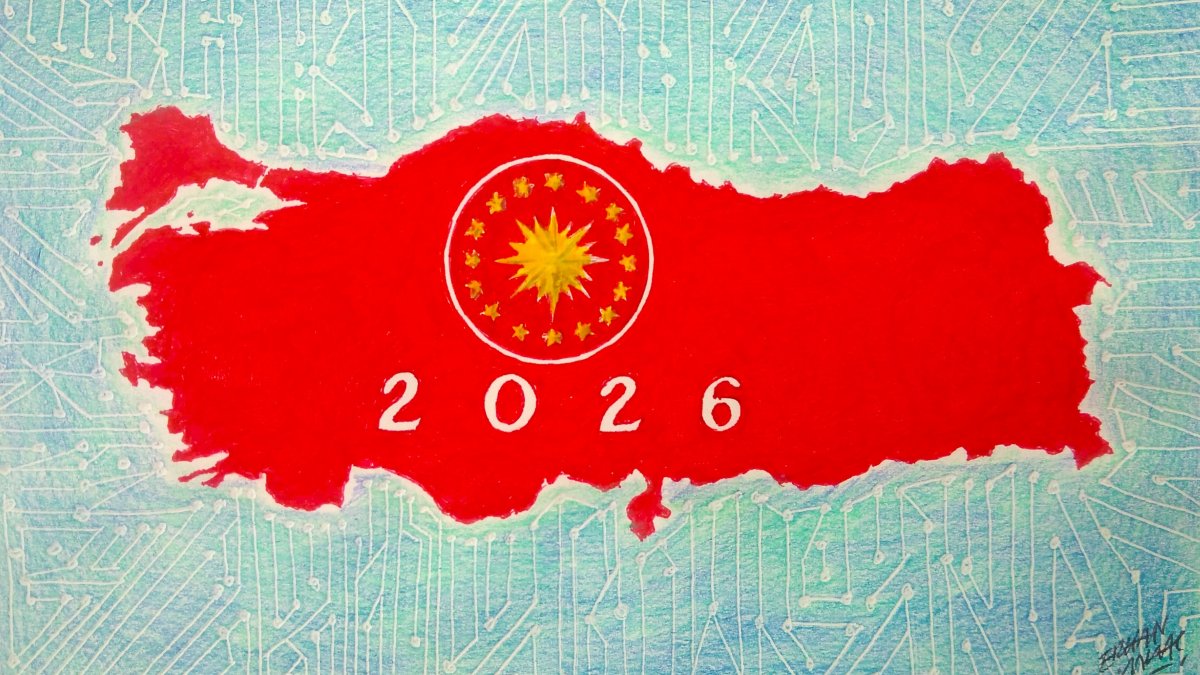
Türkiye’s technological development has been discussed for decades, especially in relation to the defense sector. However, the release of Türkiye’s 2026 Presidential Annual Program a few weeks ago marks more than a routine policy update when seen from a technological perspective. Indeed, this program signals a deeper transformation in how the Turkish state understands power, governance and technological change. Artificial intelligence (AI), long discussed as an enabler of modernization and efficiency, is now framed as a core component of state capacity itself. Rather than treating AI as a sectoral innovation tool, the 2026 program places it at the center of public administration, strategic autonomy, defense planning and more.
This shift matters not only for Türkiye but also for how middle powers navigate the emerging global order. As competition over data, computing and advanced technologies intensifies, AI is increasingly shaping how states preserve autonomy, absorb shocks and sustain institutional performance. Türkiye’s 2026 program offers a revealing case study of how a middle power seeks to translate technological capability into strategic resilience.
A shift in state logic
Presidential Annual Programs traditionally outline policy priorities for the coming year. Yet the 2026 document stands out for the coherence and depth with which AI is integrated across state functions. Previous programs acknowledged digital transformation and emerging technologies, but largely treated AI as an auxiliary upgrade – something to be adopted selectively or piloted in limited domains. The 2026 program departs from this approach.
AI is no longer confined to innovation chapters or technology road maps.
Continue Reading on Daily Sabah
This preview shows approximately 15% of the article. Read the full story on the publisher's website to support quality journalism.