For decades, the art world has repeated a sentence so often that it began to sound like wisdom: a woman artist should not marry if she wants to remain free. Marriage, we were told, domesticates the female imagination. Love distracts. Partnership compromises. If a woman wanted to create work that mattered, work that resisted, challenged and endured, she was expected to stand alone, or at least appear to do so.
But history, when read carefully rather than conveniently, tells another story.
What limited women artists was never love itself. It was the absence of an equitable partnership. It was the weight of emotional labor carried alone. It was the expectation that a woman would nurture everyone else’s potential before her own. The problem was not intimacy, but imbalance. And as that imbalance slowly begins to collapse in the 21st century, a different figure is emerging with increasing clarity: The woman artist whose creativity does not shrink within partnership, but expands, quietly, decisively and with profound social consequence.
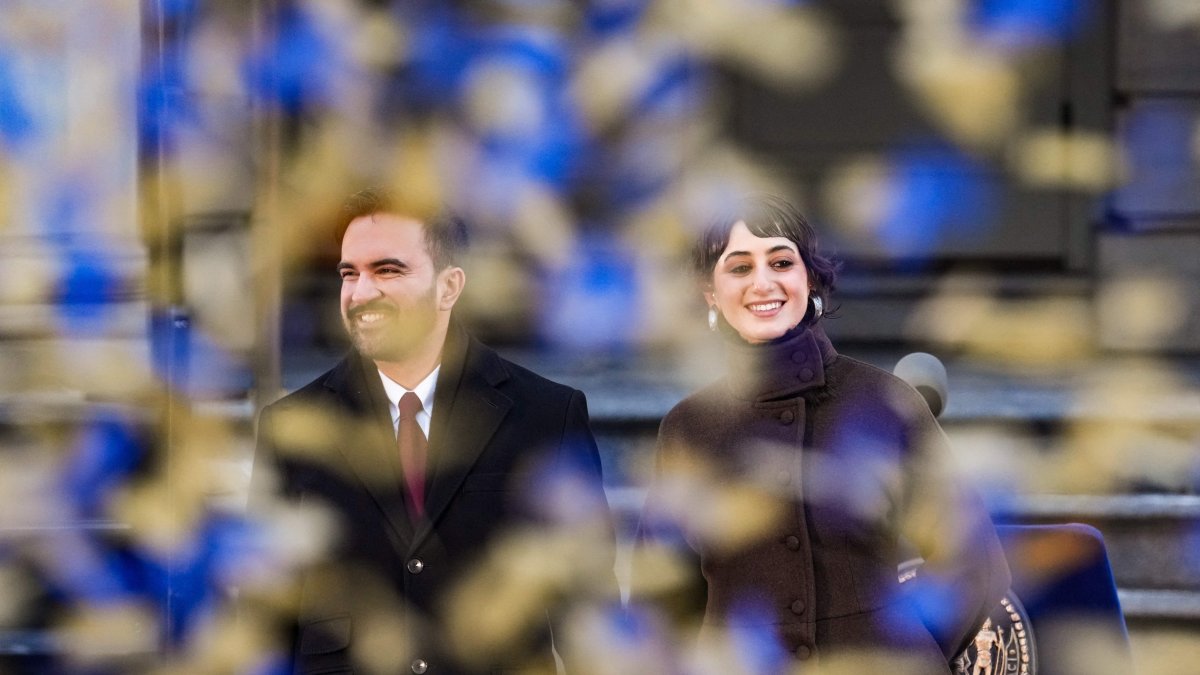
In this sense, the story unfolding around Zohran Mamdani and his wife Rama Duwaji is not simply a personal narrative. It is a cultural signal. It marks the arrival of a new archetype: an artist whose presence at the heart of political leadership does not soften power into sentimentality, but re-educates it into humanity.
An illustration by artist Rama Duwaji. (Courtesy of Rama Duwaji)
Rama Duwaji is not an accessory to power.
Continue Reading on Daily Sabah
This preview shows approximately 15% of the article. Read the full story on the publisher's website to support quality journalism.