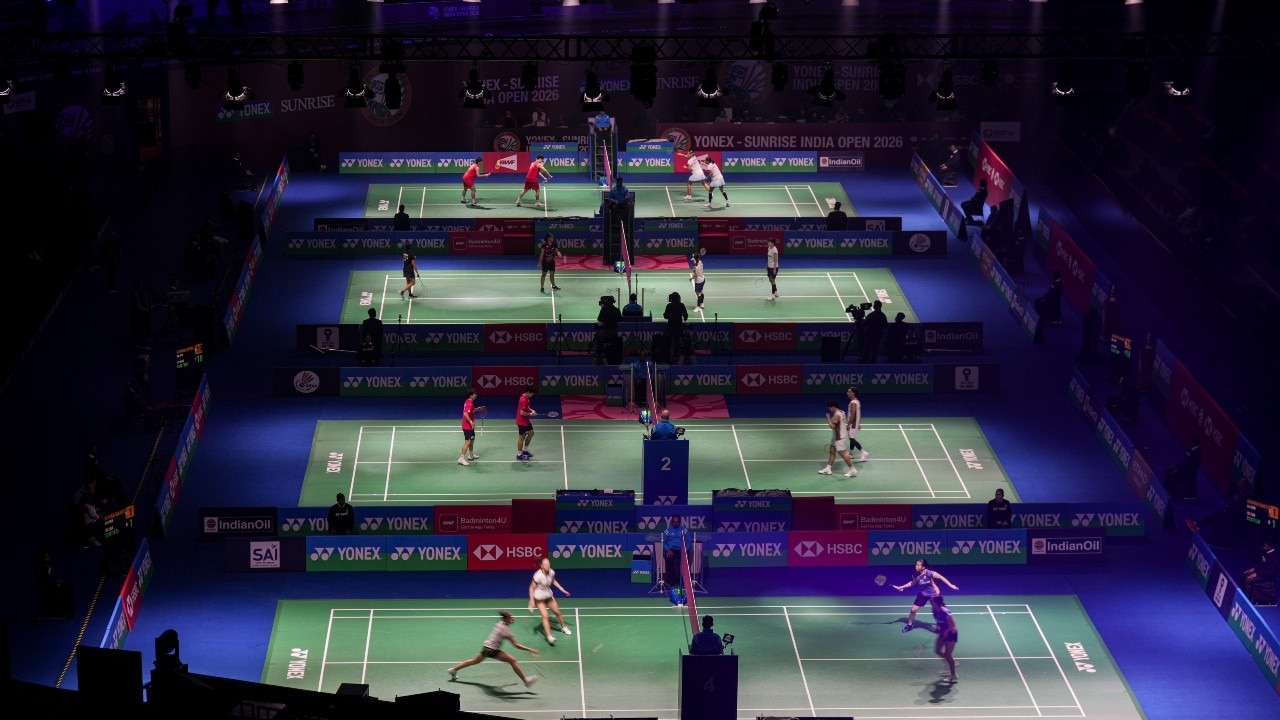
Delhi in January is not a new puzzle. Everyone who has lived through winter in the capital knows what comes with it: the dry throat, the scratchy cough, the morning haze that doesn’t lift, the air that feels heavier than it should. That familiarity is precisely why the India Open’s 2026 flashpoint landed like an accusation, not merely about badminton, but about the way Indian sport keeps mistaking inevitability for planning.
advertisement
On January 15, after a three-game win over HS Prannoy, Singapore’s former world champion, Loh Kean Yew, walked into the media area at the Indira Gandhi Indoor Stadium and said what visiting athletes often think but don’t always state so plainly. Asked if conditions were an issue, he didn’t hedge.
“Yeah, of course. Anyone would. I am surprised you guys (reporters) are okay,” he said, before adding a line that travelled far beyond the mixed zone: “I breathe less (laughs). No, I mean I just wear my mask when I can. Other than that, I try to stay indoors as much as possible. But, there’s only that much that I can do.”
Even in a sport that trains players to keep emotion off their faces, Loh kept returning to the same point.
How did the body feel at the start of the season?
“It was good in Malaysia until I came here The weather Is not so good.”
The subtext did not need decoding. You can train for endurance, manage recovery and fine-tune diet, but you cannot condition your lungs to treat hazardous air as a neutral variable.
For medical experts, the concern is straightforward. Dr. Lancelot Pinto, consultant pulmonologist and epidemiologist at P. D. Hinduja Hospital & Medical Research Centre in Mumbai, says it is fundamentally unfair to ask athletes to compete in high-intensity sport under such conditions.
Continue Reading on India Today
This preview shows approximately 15% of the article. Read the full story on the publisher's website to support quality journalism.