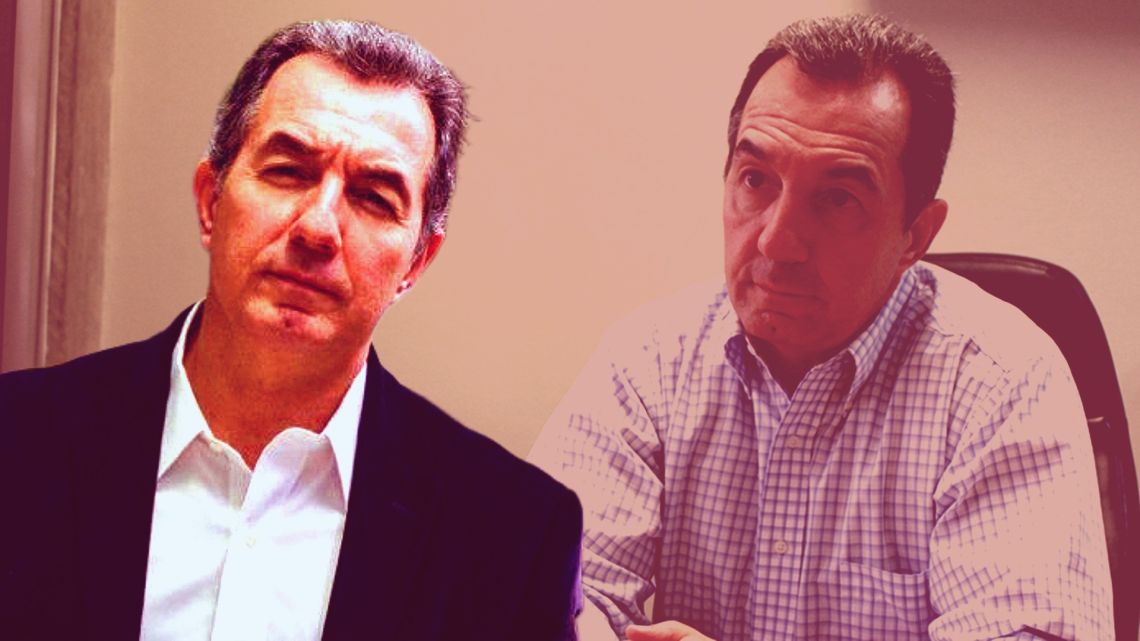
Venezuelan political scientist Benigno Alarcón Deza, resident in Caracas, is a university professor and the founder of the Centro de Estudios Políticos y de Gobierno at the Universidad Católica Andrés Bello.
In a feature interview, he analyses the collapse of the Venezuelan democratic cycle and the ambivalent impact of oil and the drift towards authoritarian government begun by Hugo Chávez.
Alarcón Deza maintains that not recognising the result of the 2024 election tore up the last shred of the Nicolás Maduro régime’s legitimacy, opening up a sequence unfolding into the recent intervention of the United States.
The analyst defends the leadership of opposition leader María Corina Machado, underlines her social support and affirms that Venezuelan society is not demanding a return to the past but a country where votes are respected and democracy becomes possible again.
Venezuela had, between 1958 and the end of the 20th century, one of the most extended cycles of civilian government with competitive elections in Latin America. How do you explain a relatively stable democratic experience ending up in an authoritarian régime?
The case of Venezuela is no different from the lost democracies of recent years, above all at the start of this century. And basically because, unlike in the past, democracy is not lost due to a coup d’état but from what normally happens in a situation from which no country is exempt – somebody with an autocratic mindset coming to power, almost always through an election, of which they take advantage to try and colonise all the state institutions. Bit by bit, they are constructing a system which can be conserved over time. This is basically what happened in 1998, when [Hugo] Chávez won the election after attempting a coup in 1992. As from 1999, he summoned a National Constituent Assembly to change the ground rules and state institutions. Taking advantage of his popularity at that time, he called new elections in a kind of refoundation of the Republic, which ended up being nothing more than basically taking control of all the state institutions and eliminating all the checks and balances proper to a democracy.
What happened to that political system emerging in 1958, with strong parties, agreements between the elites and oil money? With the concentration of power into the State, and also oil, did a distance develop between the leaderships and society, a loss of democratic legitimacy so that a person with an authoritarian mindset could reach power?
That's an excellent question and a debate we’ve been having for a long time. The political parties definitely ended up losing legitimacy for various reasons – some of them the fault of the parties themselves and others more structural. Venezuela passed from being a basically rural to an urban country thanks to the oil boom and a highly accelerated growth in a few years, leading to asymmetries in the population which grew very rapidly. We were left with a state without the capacity to somehow even out those differences a bit and to try and create opportunities for everybody.
Continue Reading on Buenos Aires Times
This preview shows approximately 15% of the article. Read the full story on the publisher's website to support quality journalism.