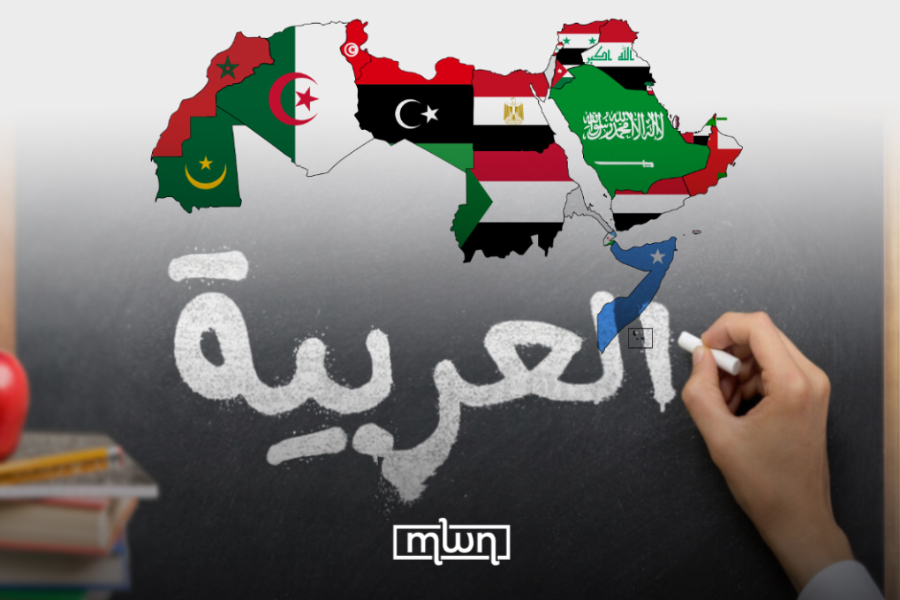
Marrakech – The title of this article might seem absurd at first glance. After all, Arabic is spoken by hundreds of millions of people – by some estimates around 300-400 million native speakers – and it is an official language in about 24 countries. It’s one of the six official languages of the United Nations (celebrated with a UN Arabic Language Day every December 18), and it boasts a rich literary and religious heritage. How could anyone claim that “Arabic” has zero speakers, or even ask if Arabic is really a language? Yet this provocative question touches on a deep linguistic puzzle: what do we actually mean by “Arabic” as a language?
The crux of the issue is that Arabic is not a single monolithic language in the way, say, French or Japanese is. Instead, it is more accurate to think of Arabic as a family or continuum of many spoken dialects – some of which differ from each other as much as separate languages do. When we talk about “Arabic speakers” in everyday terms, we are grouping together people from Morocco to Iraq who all identify with the Arabic language. However, the actual dialects they speak natively are often not mutually intelligible across long distances.
To understand this concept, one can give the example of American and British English: despite developing thousands of kilometers apart, they remain mutually intelligible because they shared an early common standard and stayed connected through institutions, print, and later mass media.
Linguists describe Arabic as a classic example of a dialect continuum: neighboring varieties of Arabic are similar enough to converse, but as you travel across the Arab world, differences accumulate. A Syrian and a Lebanese, for example, communicate with relative ease; a Syrian and an Egyptian might have to slow down but can generally understand one another. But if you take speakers at opposite ends of the Arabophone world – say, a Moroccan and an Iraqi – direct understanding in their colloquial speech is very difficult without one or both adapting their language.
In fact, even within this broad continuum, experts note that speakers from distant areas, across
Continue Reading on Morocco World News
This preview shows approximately 15% of the article. Read the full story on the publisher's website to support quality journalism.