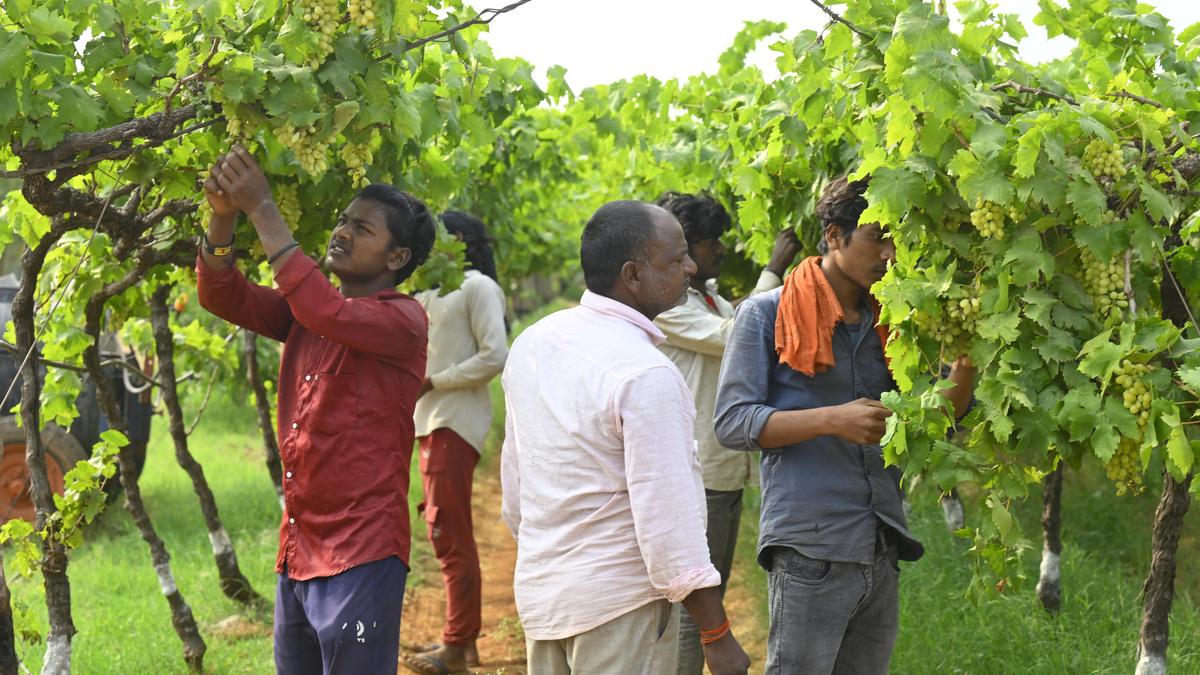
Phulender Thakur arrived in Telangana with no certainty. In his mid 40s now, he left Madhepura in Bihar for a grape farm in Medchal Malkajgiri district, drawn south by an elder brother already working there. The vines were heavy then, grape cultivation was spread across large tracts and labour was plentiful. Phulender learnt fast, and the farm soon became familiar ground.
The scene, however, changed gradually. Acreage under grapes shrank, fields thinned out and many growers exited. But Thakur stood firm, his skills outlasting the crop’s declining demand. Today, he heads a group of workers at a grape farm in Muduchinthalapally, with three of his brothers employed alongside him. Word has travelled back home too; youngsters from Bihar now call him for work references, hoping for a foothold in Telangana’s farms.
He spends most part of the year here, returning to his family in Madhepura once or twice annually. “I don’t get to go home even for Chhath Puja, one of Bihar’s biggest festivals, because that is when we have to cut the grape stems,” Thakur says, as a group of youngsters standing beside him nod in agreement. These youth, all from his native village, arrived in Telangana three years ago and learnt the ropes of grape cultivation under his guidance.
Thakur’s story reflects a pattern increasingly visible across the State. Farmers, farmer welfare organisations and others associated with the sector point to a steady rise in the number of agricultural workers arriving from other States.
The scale of this dependence is shaped by the sheer size of the agricultural landscape here.
Continue Reading on The Hindu
This preview shows approximately 15% of the article. Read the full story on the publisher's website to support quality journalism.