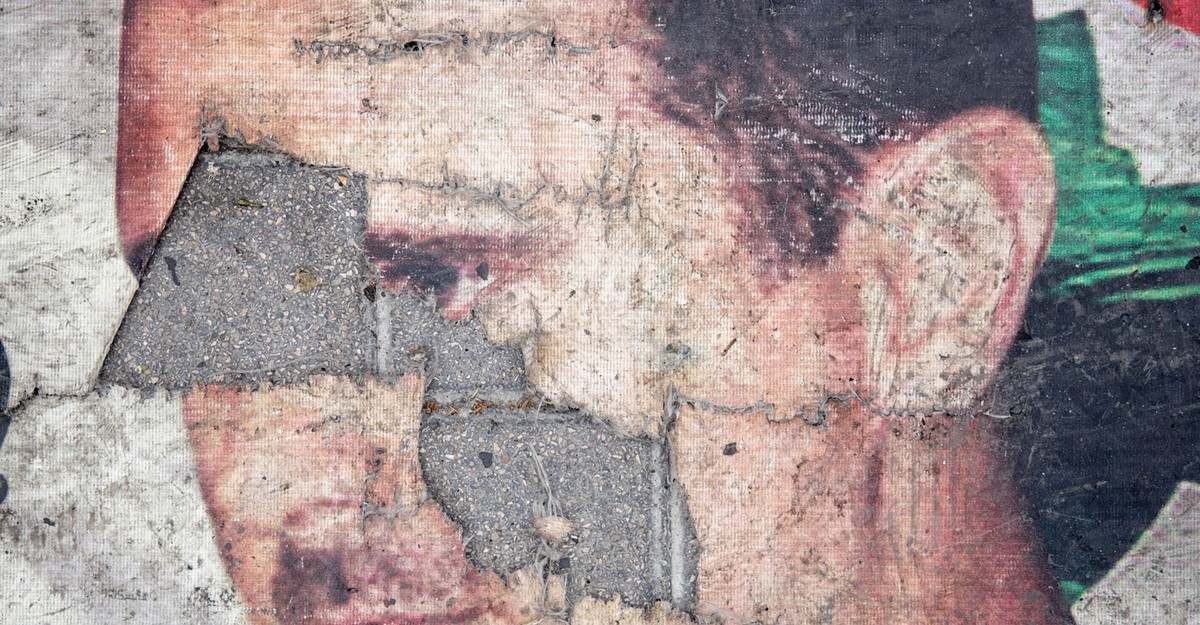
Some dictators go down fighting. Some are lynched and strung up for their victims to spit on. Some die in bed.
Bashar al-Assad, who oversaw the torture and murder of hundreds of thousands of his fellow Syrians during a quarter century in power, may have achieved something new in the annals of tyranny. As the rebels closed in on Damascus on December 7, 2024, Assad reassured his aides and subordinates that victory was near, and then fled in the night on a Russian jet, telling almost no one. I remember seeing a statement issued that same evening declaring that Assad was at the palace performing his “constitutional duties.” Some of his closest aides were fooled and had to escape the country however they could as rebel militias lit up the sky with celebratory gunfire.
Assad’s betrayal was so breathtakingly craven that some people had trouble believing it at first. When the facts became impossible to deny, the loyalty of thousands of people curdled almost instantly into fury. Many swore that they had always secretly hated him. There is an expression in Arabic for this kind of revisionist memory: When the cow falls, the butchers multiply.
But the emotion was real for many, as was the belief that Assad was solely responsible for everything that had gone wrong. “You can still find people who believe in Muammar Qaddafi, who believe in Saddam Hussein,” Ibrahim Hamidi, a Syrian journalist and editor, told me. “No one now believes in Bashar al-Assad, not even his brother.”
The sudden collapse of the Assad regime put an end to a cruel police state, but now there is virtually no Syrian state at all outside the capital. The country’s new leader, Ahmed al-Sharaa, has done a superb job of charming Donald Trump and other world leaders. He is also an Islamist whose authority is tenuous, and whose country remains so dangerously volatile that it could easily descend into another war.
No one—not the CIA, not the Mossad—appears to have had any idea that Assad would fall so fast. But in the days and weeks afterward, an explanation for his regime’s collapse began to gain currency. Assad’s backers, Russia and Iran, had been drawn into other conflicts, with Ukraine and Israel respectively, and no longer had the ability to protect him. Their sudden withdrawal exposed what had been hidden in plain sight for years: the terrible weakness of an exhausted, corrupt, and underpaid army. A little like the American-backed regime in Afghanistan that fell in 2021, the Assad dynasty was the casualty of broader geopolitical realignments. After the fact, its fall came to seem inevitable.
But over the past year, I have spoken with dozens of the courtiers and officers who inhabited the palace in Damascus, and they tell a different story. Many describe a detached ruler, obsessed with sex and video games, who probably could have saved his regime at any time in the past few years if he hadn’t been so stubborn and vain. In this version, it was not geopolitics that doomed the regime. None of the countries in the region wanted Assad to fall, and several of them offered him lifelines. If he had taken hold of them, he would almost certainly be sitting in the palace now. Even in the final days, foreign ministers were calling, offering deals. He didn’t answer. He appears to have been sulking, angered by the suggestion that he might have to give up the throne.
In the end, Assad’s embittered loyalists may have been right. It was all about Bashar.
Emin Özmen / Magnum Photos Syrians celebrate the fall of the Assad regime in Damascus in December 2024.
Perhaps all autocrats come to think of themselves as invincible, but Assad had a particular reason for his misplaced confidence: He had already survived one near-death experience.
The Arab Spring uprisings reached Syria in 2011 and blazed up into civil war. A large portion of the country’s people took up arms against its ruler, and scarcely anyone expected Assad to survive. “I have no doubt that the Assad regime will soon discover that the forces of change cannot be reversed,” Barack Obama declared in 2012. Obama was so confident that his State Department helped fund a “Day After Project” to be ready for the new Syria. My editors at The New York Times asked me to write an obituary of the Assad dynasty, and I remember thinking that I should get it done quickly.
Continue Reading on The Atlantic
This preview shows approximately 15% of the article. Read the full story on the publisher's website to support quality journalism.