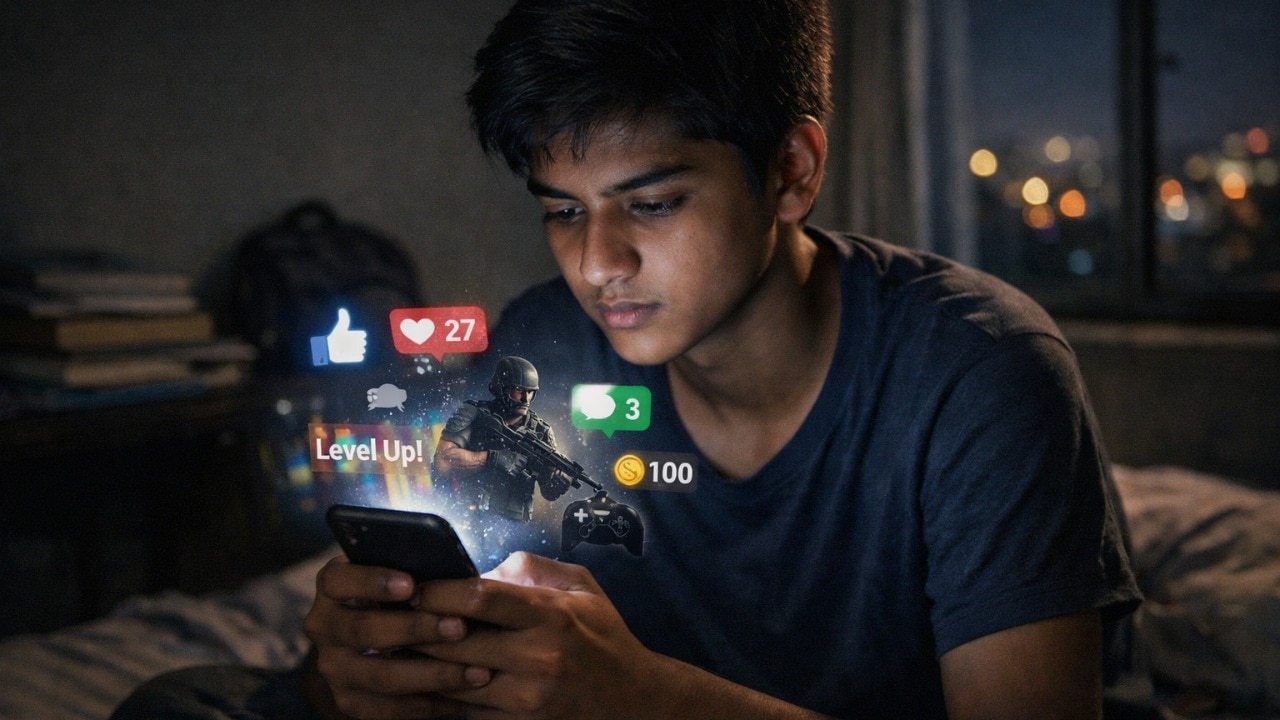
It usually starts the same way. A parent confiscates a smartphone. A teenager spirals. Screenshots of heated debates flood WhatsApp groups. And suddenly, what looked like a household fight turns into a national policy question: should children and teenagers even have smartphones or social media?
This is no longer a fringe argument. What began as school-level and parental restrictions in countries like Spain has now snowballed into a global debate. Governments across Europe, parts of Asia, and even tech-heavy economies are openly weighing bans, age limits, school-wide restrictions, and stricter social media rules for under-18s.
advertisement
India is watching closely, and for good reason.
With one of the world’s youngest populations and some of the cheapest data rates, this question hits closer home than most, especially after cases like the recent Ghaziabad sisters’ deaths, where family members alleged that extreme smartphone dependence and exposure to online content played a role.
Such cases reignite public anxiety over how deeply unregulated digital habits can affect vulnerable young minds.
India’s own Economic Survey 2025–26 underlines why the debate feels urgent. It notes that 85.5 per cent of households now own at least one smartphone, with near-universal mobile and internet use among those aged 15–29. In other words, access is no longer the issue; the consequences of constant, high-intensity digital use are.
But whether smartphones should be banned or not is not a simple yes-o
Continue Reading on India Today
This preview shows approximately 15% of the article. Read the full story on the publisher's website to support quality journalism.