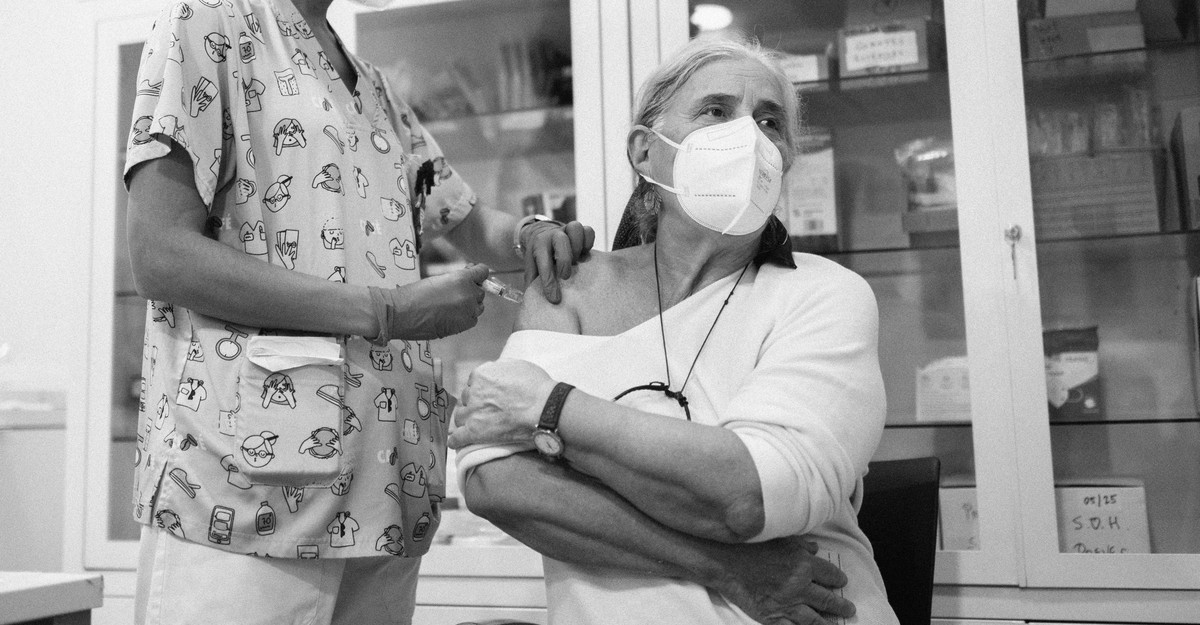
In 2021, just months after the first COVID vaccines debuted, concern was growing about an exceedingly rare but sometimes deadly outcome of certain shots. Two related vaccines—one from AstraZeneca and the other from Johnson & Johnson—were linked to dangerous blood clotting.
Out of almost 19 million doses of Johnson & Johnson’s version given in the United States during the first two years of the pandemic, at least 60 such cases were identified. Nine of them were fatal. In the United Kingdom, where almost 50 million doses of the AstraZeneca shot were given, 455 cases occurred; 81 people died. In Germany, at least 71 cases were identified, also linked to AstraZeneca. By late spring, use of both the AstraZeneca and the Johnson & Johnson vaccine was paused, and ultimately both were pulled from the market. But the mystery surrounding the rare blood clotting caused by these vaccines lingered.
Now researchers believe they have cracked the case. They have hard evidence for how the blood clotting happened, and they believe that their findings could help make si
Continue Reading on The Atlantic
This preview shows approximately 15% of the article. Read the full story on the publisher's website to support quality journalism.