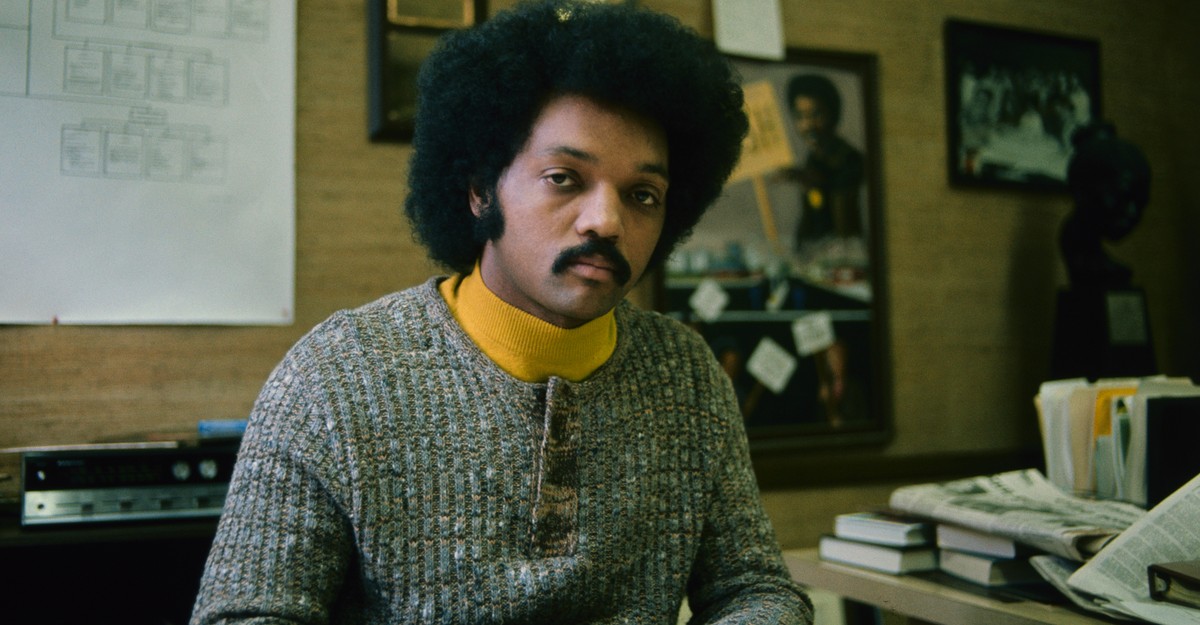
In 1988, as the Reverend Jesse Jackson was making his second presidential bid, I left the campaign trail, where I was covering the eventual Democratic nominee, Michael Dukakis, to make a personal pilgrimage to Wichita, Kansas. I had come to see my sick grandfather, Ga-Ga, who was comatose in the hospital and seemed barely there.
Day and night, I held his hand hoping he would make it. I knew he had admired Jackson’s first presidential bid in 1984 and the courage—some called it audacity—required to run at all. So I told him about the huge, overwhelmingly white crowds Jackson was drawing in places like Iowa and Wisconsin. There was a refrain Jackson had been using in Iowa to convince audiences he really could win this time: “Great days just keep on coming.” I was not sure if Ga-Ga could hear me, but I repeated the refrain to him, trying anything I could to uplift him as he struggled to hold on to his life. “Great days just keep on coming.” And to my surprise, I glimpsed a thin smile, and he squeezed my hand.
Ga-Ga didn’t make it. But Jackson came much closer to winning the Democratic nomination than anyone had expected. He won 11 primaries and caucuses, doubled his 1984 combined-vote total to nearly 7 million, and finished as runner-up to Dukakis. His impact in that hospital room—and he wasn’t even there—eliciting a glimmer of life from my dying grandfather, has always st
Continue Reading on The Atlantic
This preview shows approximately 15% of the article. Read the full story on the publisher's website to support quality journalism.