Over the past couple of months, several researchers have begun making the same provocative claim: They used generative-AI tools to solve a previously unanswered math problem.
The most extreme promises—AI-assisted resolutions to some of the hardest problems in mathematics—may well turn out to be empty hype. But a number of AI-written solutions, albeit to far less lauded problems, have checked out. These were answers to a number of the Erdős Problems—more than 1,000 mathematical questions set forth by the Hungarian mathematician Paul Erdős—written with generative-AI models including ChatGPT. OpenAI quickly claimed a victory: “GPT-5.2 Pro for solving another open Erdős problem,” OpenAI President Greg Brockman posted on X in January. “Going to be a wild year for mathematical and scientific advancement!” (OpenAI and The Atlantic have a corporate partnership.)
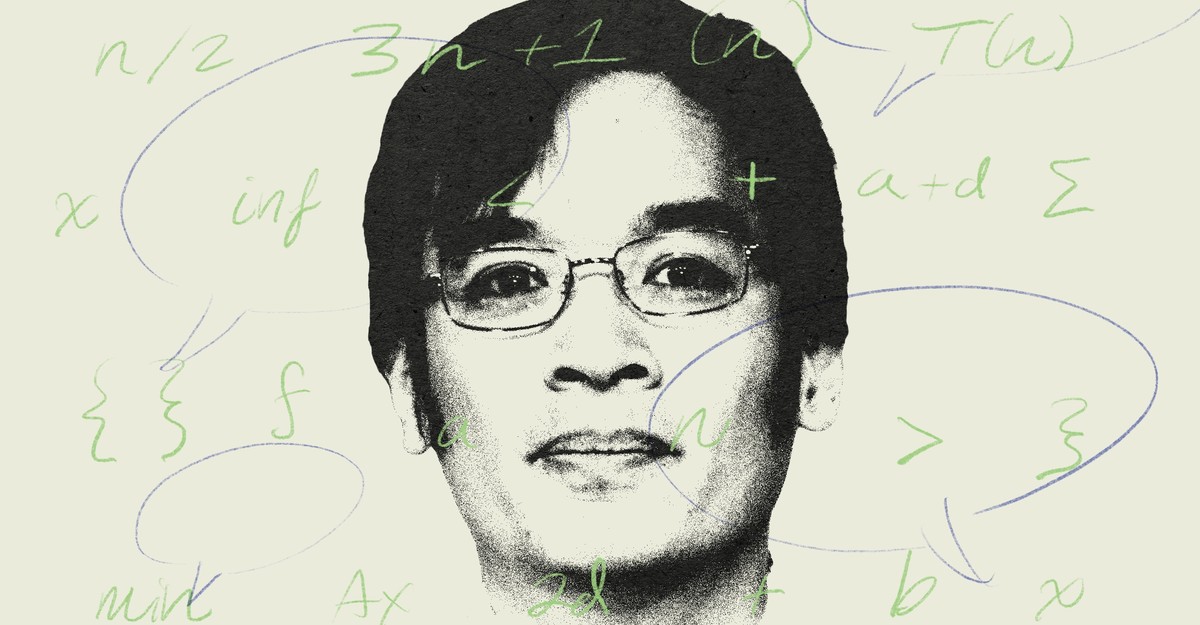
Much of the excitement around the news has stemmed from the adjudicator of these AI-written proofs: Terence Tao, a professor at UCLA who is widely considered to be the world’s greatest living mathematician. His stamp of approval seemingly legitimizes the greatest promise of generative AI—to push the frontier of human knowledge and civilization.
Continue Reading on The Atlantic
This preview shows approximately 15% of the article. Read the full story on the publisher's website to support quality journalism.