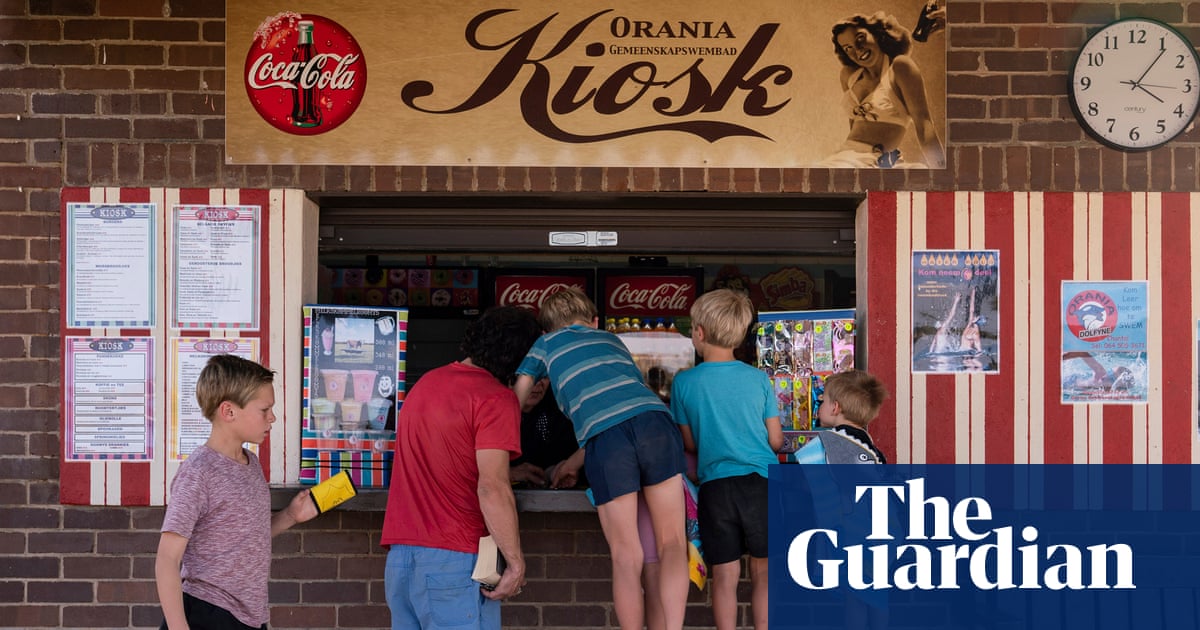
There’s a little town in the scrub in South Africa – a full day’s drive from the country’s big cities – that has become perhaps the most scrutinised place on earth, given its size. It is 9 sq km (3.5 sq miles) of suburban-style houses harbouring about 3,000 people, with a main drag, a municipal swimming pool, one gas station and some pecan farms. Nothing of consequence ever really happens there, a fact the townspeople take as a point of pride. And yet over the past three decades, dozens of English-language news outlets have made a pilgrimage to it, often more than once. The New York Times alone has run four dedicated profiles. The essays have kept pace year after year, quoting the same people over and over, even as nothing of note occurred. There’s been no war, no disaster.
That changelessness is the point. No people of colour are allowed to live in the town, called Orania. The name is a nod to the river that runs nearby – and to the Orange Free State, the apartheid-era designation for the province in which it lies. Orania’s founders established it in 1991, the year after South Africa’s best-known Black liberation leader (and future president), Nelson Mandela, was freed following 27 years in prison.
Understanding that Mandela’s liberation meant that white-minority rule was coming to an end, the founders trekked into the desert, bought a disused mining town wholesale and established a colony. Laws permitting – indeed, mandating – spatial segregation by race had just been abolished in the country, so they declared the town private property. Orania’s founders said they wanted to run an experiment: could people of European descent live in South Africa without relying on people of colour to do manual labour, pump their petrol and clean their houses? In Orania, they stressed, white residents would do such work.
Orania’s founders also foresaw a brutal race war, predicting that the population of the town would grow to 10,000 and its ideals would spread across an entire nearby province, drawing in hundreds of thousands.
I’ve lived in South Africa for 16 years, ever since I left the US in 2009. And I, too, dutifully went for the obligatory journalist’s visit after I landed. But in the ensuing years, I began to wonder why the town was a source of such stubborn fascination abroad. In the beginning, the US and European reporters that descended on the town mostly hailed from mainstream or leftwing outlets, and they seemed to buy its claims about its appeal, insisting that it was steadily attracting more and more revanchist white residents. At first I thought these reporters might have been comforting themselves: “Our societies may have failed to address persistent racial injustice, but look at white South Africans, longing to return to outright segregation! At least we’re not that backward.”
But more lately, the fascination with Orania has spread to the right wing outside South Africa. Starting in the mid-2010s, as Donald Trump was muscling his way on to the political stage, Australian, European and, especially, American conservative commentators began to talk about the town. They, too, portrayed it as thriving – because of the enormous threat they claimed white people faced in the rest of South Africa. In these years – during which a Black man was president of the US and the Black Lives Matter movement arose – it seemed as if a big shift was happening. Not only would so-called minorities seek legal equality in white-led societies but they also would take greater ownership of politics and the national story.
White Americans worried about this transition latched on to South Africa as a supposed natural experiment.
Continue Reading on The Guardian
This preview shows approximately 15% of the article. Read the full story on the publisher's website to support quality journalism.