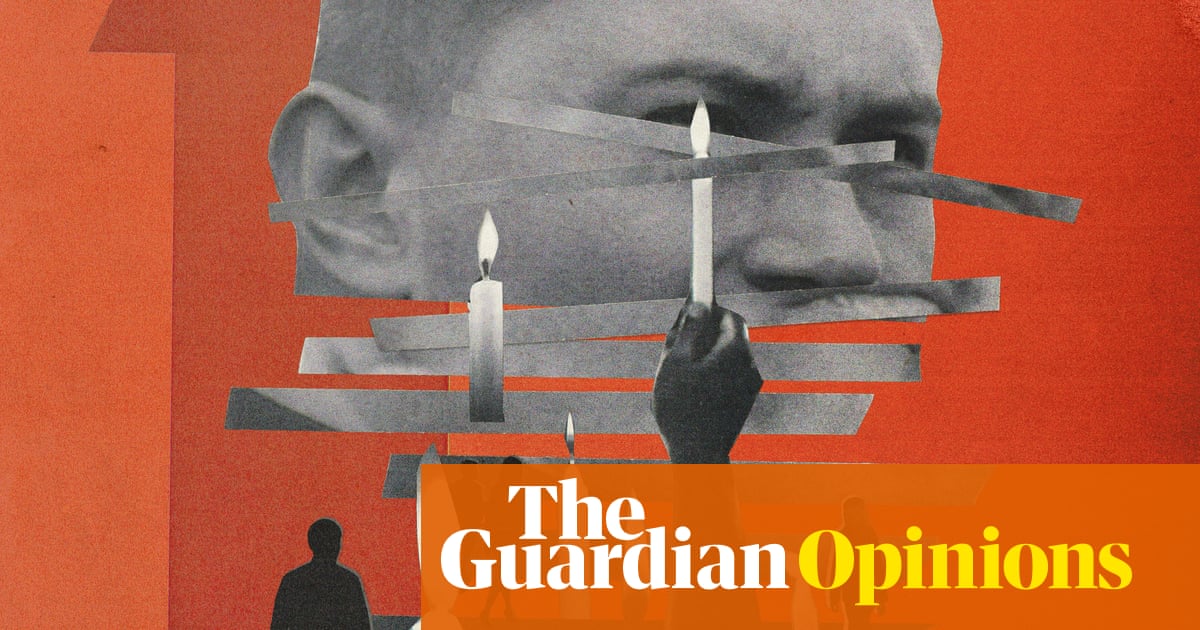
Having grown up in Banská Bystrica in totalitarian Czechoslovakia, I vividly remember standing in the city’s historic square a few days after 17 November 1989, the start of the Velvet Revolution, holding candles in solidarity with the students protesting in Prague. Never would I have imagined that 35 years later, I would be speaking at a rally in the same square, this time urging the preservation of democracy.
Back then, when I was a young social anthropology academic at our local university, activism was far from my mind. But everything changed for me in 2013 when Marian Kotleba, leader of the neo-Nazi People’s Party Our Slovakia, was elected as regional governor. The shock was enormous. No one I knew had believed that such an outcome was possible, yet it happened. Realising the dangers this posed, many like-minded individuals knew we couldn’t stand by idly.
View image in fullscreen Marian Kotleba Illustration: Guardian Design/Reuters/Getty Images
On the night after the election, a group of us gathered on the steps of the Museum of the Slovak National Uprising, a site symbolising resistance against Nazi Germany and its Slovak puppet
Continue Reading on The Guardian
This preview shows approximately 15% of the article. Read the full story on the publisher's website to support quality journalism.