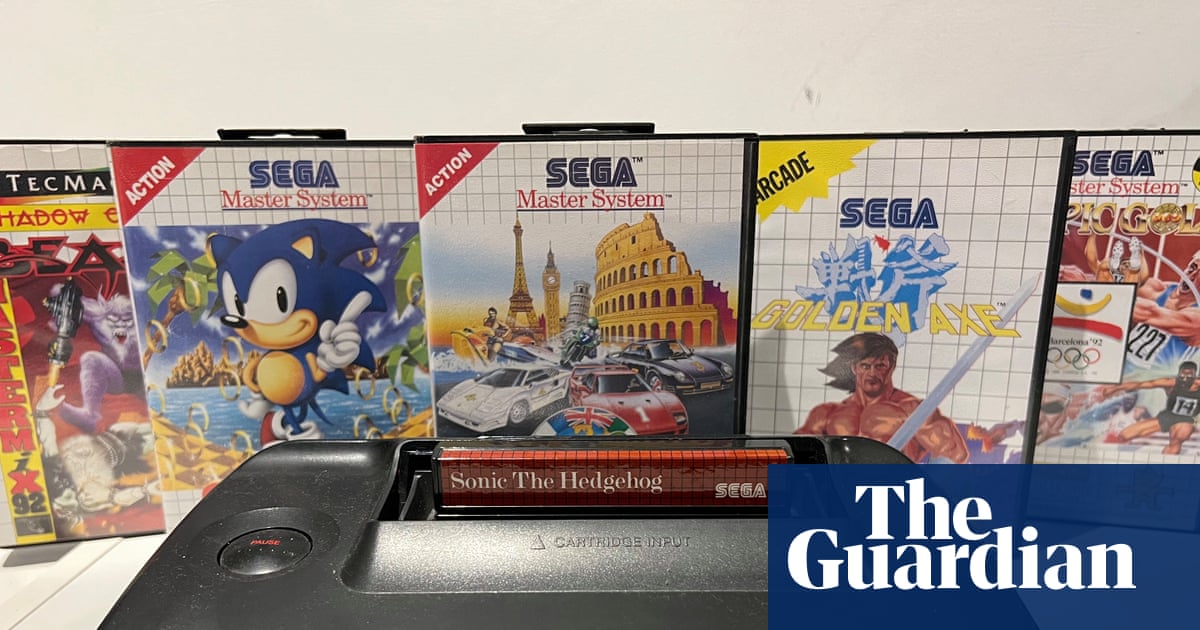
There’s an old maxim that history is written by the victors, and that’s as true in video games as it is anywhere else. Nowadays you’d be forgiven for thinking that the Nintendo Entertainment System was the only console available in the mid-to-late 1980s. If you were brought up in Nintendo’s target markets of Japan and North America, this chunky contraption essentially was the only game in town – the company had Mario after all, and its vice-like hold on third-party developers created a monopoly for major titles of the era. But in Europe, where home computers ruled the era, the NES was beaten by a technologically superior rival.
The Sega Master System was originally released in Japan in the autumn of 1985 as the Sega Mark III. Based around the famed Z80 CPU (used in home computers such as the Spectrum, Amstrad and TRS-80) and a powerful Sega-designed video display processor, it boasted 8kb of RAM, a 64-colour palette and the ability to generate 32 sprites on screen at one time – making the NES (based on the older 6502 processor) look like an ancient relic.
At first it was marketed domestically as a continuation of Sega’s SG-1000 series of machines, which were closer to affordable home computers than games consoles, with their optional keyboards and printers.
Continue Reading on The Guardian
This preview shows approximately 15% of the article. Read the full story on the publisher's website to support quality journalism.