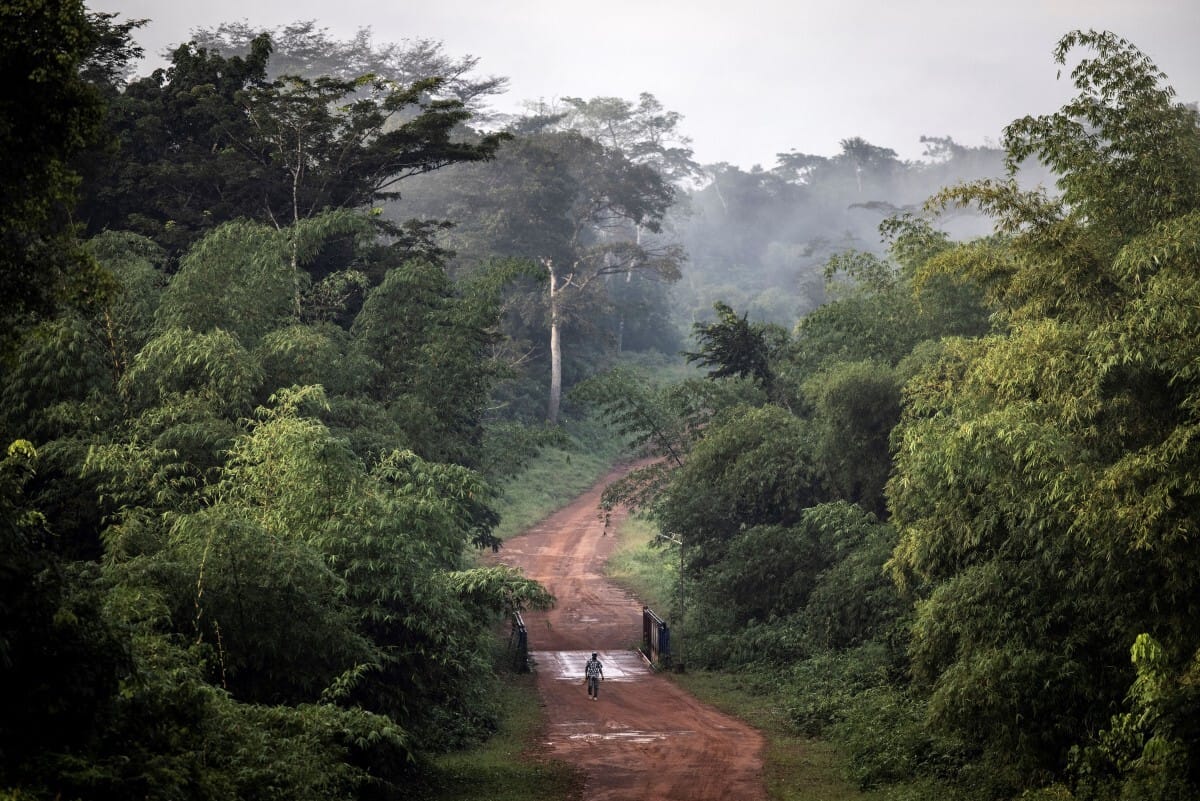
When Liberia’s government signed an agreement with a little-known Dubai company run by a royal sheikh in 2023, the “carbon credit” deal promised to protect vast tracts of forests and offset big polluters’ emissions.
It was one of a flurry of deals UAE-based Blue Carbon signed that year covering millions of hectares of forests across Africa from Liberia to Zimbabwe -– in one case amounting to a fifth of a country’s landmass.
African governments would safeguard forests for a share of revenues from carbon credit sales, benefits for communities and help fighting deforestation. It was promoted as a win-win.
But more two years on, Liberia’s Blue Carbon deal has stalled. Other accords across Africa and elsewhere have also gone nowhere, while the UAE company itself appears to have fallen silent, according to a joint investigation by AFP and Code for Africa, an investigative organisation.
“It was stopped,” Elijah Whapoe, Liberia’s National Climate Change Steering Committee (NCCSC) coordinator, told AFP when asked about the status of the Blue Carbon agreement.
“As we speak, there is no attempt to my knowledge, anything, about trying to resuscitate it.”
Blue Carbon’s Africa venture highlights the complexity of delivering on carbon credits, schemes that still lack oversight and are often criticized for offering large polluters a chance to “greenwash” emissions with little or no impact on climate change.
Carbon credits or offsetting allow greenhouse gas producers to “cancel out” some of their emissions by investing in projects that prevent or reduce carbon dioxide production.
Continue Reading on The Guardian Nigeria
This preview shows approximately 15% of the article. Read the full story on the publisher's website to support quality journalism.