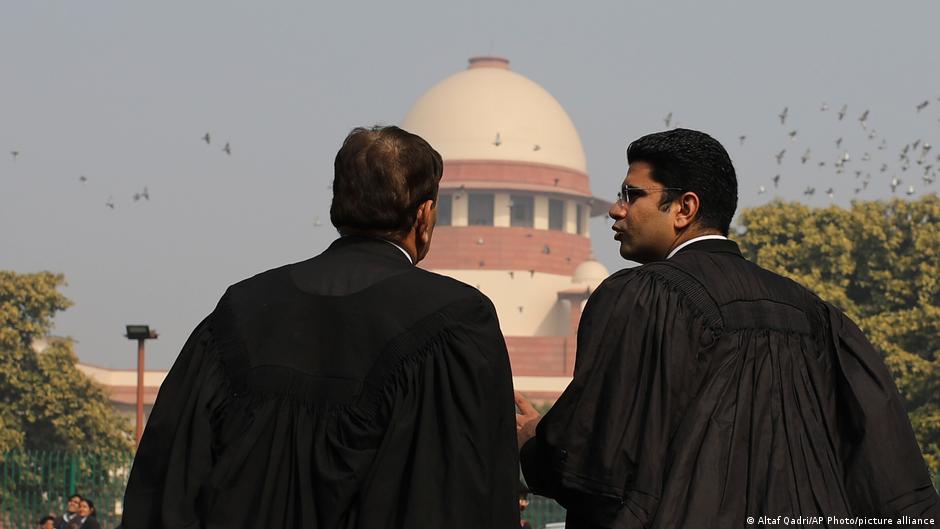
With Dalit Chief Justice Bhushan Ramkrishna Gavai retiring, India's top court will be down to one Dalit and one woman — with most of the judges being upper-caste Hindu men. Is the court ready for more diversity?
Over the last six months, India's highest court has been headed by a man who hails from one of the most discriminated-against communities in India.
Chief Justice Bhushan Ramkrishna Gavai , who is set to retire on November 23, briefly gave the country a rare sight — a person with Dalit heritage in power. Dalits belong to the lowest strata in a complex caste system in India's society, which has its roots in the dominant religion of Hinduism. The caste, once referred to as "untouchables," still faces discrimination and violence in the country.
Gavai's father was a prominent leader in the Dalit community who converted to Buddhism before Gavai was born. Justice Gavai is also a practicing Buddhist. Throughout his career, he acknowledged his Dalit identity and stated that affirmative action helped him reach the top of the Supreme Court. To this day, Gavai is the first Buddhist and second Dalit to serve as its chief justice.
Despite Gavai's rise, women and members of disadvantaged communities still battle historic disadvantages, favoritism and gender discrimination when trying to advance their careers.
DW looks at the diversity in India's apex court, which remains one of the strongest independent institutions in the country, taking into account judges' gender, religion and caste.
What does data show?
With the Supreme Court not providing official data on the caste identity of its members, not all judges' caste and religio
Continue Reading on Deutsche Welle
This preview shows approximately 15% of the article. Read the full story on the publisher's website to support quality journalism.