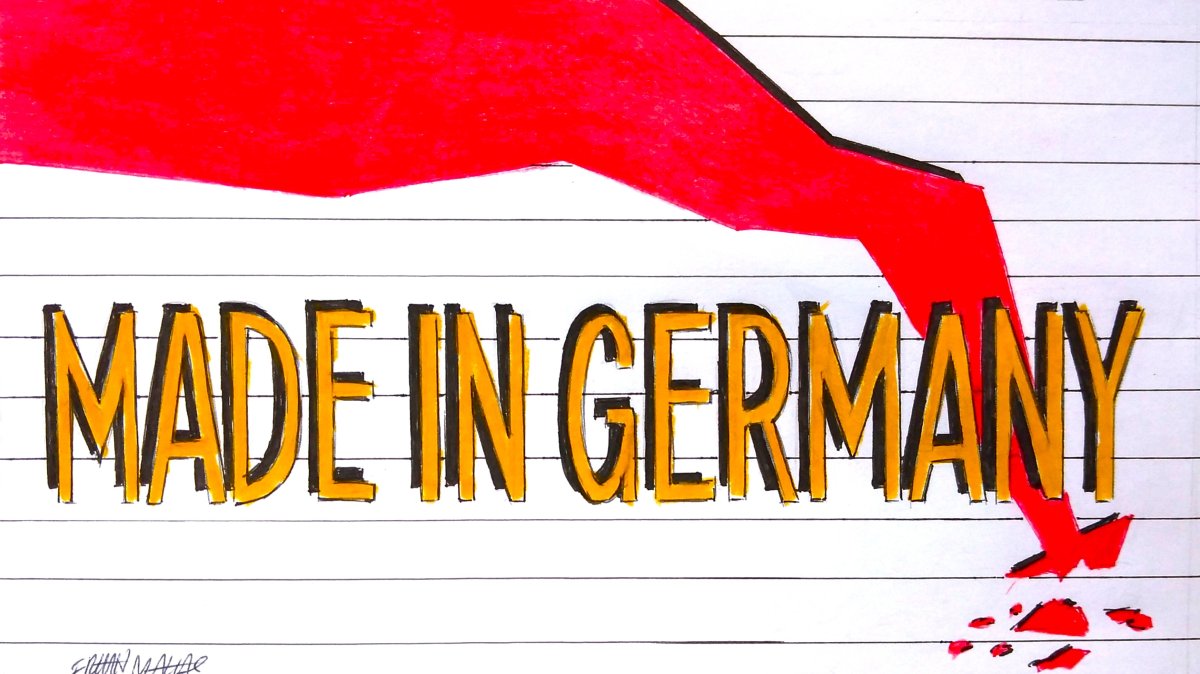
The automotive industry, once the symbol of Germany's economic strength, is now experiencing one of the deepest crises in its history. Giants such as Mercedes-Benz, BMW and Volkswagen had for decades represented global standards of quality, durability and engineering excellence. Yet, this traditional superiority is now being seriously shaken.
Accounting for roughly one-fifth of Germany's manufacturing output and about 6% of its gross domestic product (GDP), this vast sector has long been more than just an economic domain; it has been a cornerstone of the nation's social identity and welfare model. The current crisis, therefore, calls into question not only the future of an industrial sector but also the very foundations of Germany's development paradigm.
Automobile production in Germany has declined dramatically in recent years. From 5.6 million units in 2017, production fell to below 4 million in 2024, and this downward trend is expected to continue into 2025. In the first half of 2025, Mercedes-Benz’s profits dropped by 56%, while Porsche’s operating profit plunged by an alarming 91%. BMW’s profits also declined by one-third in the second quarter. This picture signals not merely a short-term contraction but a long-term crisis of competitiveness and transformation. The sharp decline in sales in China – traditionally a crucial market for German cars – has further exposed the fragility of Germany’s export-dependent economic mode
Continue Reading on Daily Sabah
This preview shows approximately 15% of the article. Read the full story on the publisher's website to support quality journalism.