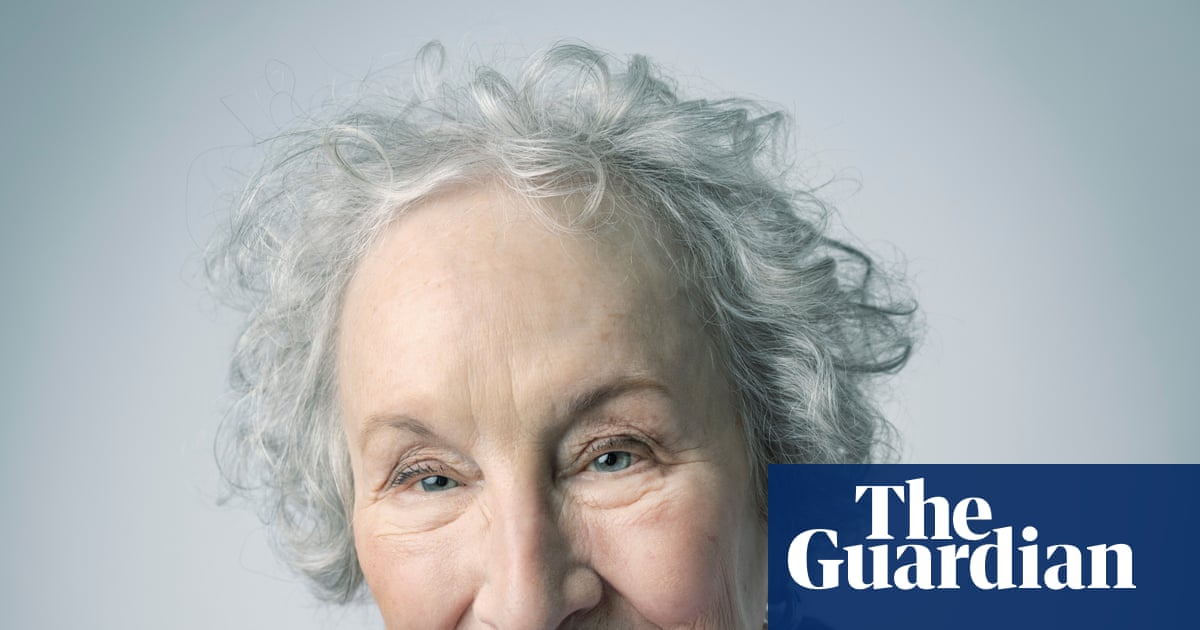
After the phenomenal global success, not to mention timeliness, of the TV adaptation of The Handmaid’s Tale in 2017, Margaret Atwood has been regarded as “a combination of figurehead, prophet and saint”, the author writes in her new memoir Book of Lives. Over 600 pages this “memoir of sorts” ranges from her childhood growing up in the Canadian backwoods to her grief at the death of her partner of 48 years, the writer Graeme Gibson, in 2019, with many friendships, the occasional spat and more than 50 books (including Cat’s Eye, Alias Grace and the Booker prizewinning The Blind Assassin and The Testaments) in between.
The author, who turned 86 last week, always likes to take the long view, often from a couple of centuries’ distance. As Rebecca Solnit notes below, she now has a long view of our times. Age and the freedom of being a writer (as she says, she can’t get sacked) make her fearless in speaking out.
She always dismisses the notion of prophetic powers – “I’d have cornered the stock market,” she has said (although she did predict the financial crash in her 2008 book Payback). She certainly doesn’t want to be idolised as a saint – that rarely ends well, and besides, she holds grudges. She even chafes against her mantle as feminist icon, “expected to do the Right Thing for women in all circumstances, with many different Right Things projected on to me from readers and viewers”, as she writes in Book of Lives.
Atwood is as hard to pin down as the insects she and her brother, Harold, played with as children, encouraged by her father’s job as an entomologist. A natural scientist (many of her family were scientifically inclined) and sceptic, she is also a dabbler in palm-reading and the occult. There is nothing she can’t tell you about nature, from the sex lives of snails to rare birds (see questions from Jonathan Franzen and Anne Enright); or history – the Salem witch trials and the French Revolution are particular areas of expertise.
She can be silly and stern, sometimes within the same sentence, but there is a deep moral seriousness beneath all her work. She supports many good causes, young writers and environmental projects. She still goes to the Arctic Circle each year, and to Pelee Island for the bird migration each spring.
Continue Reading on The Guardian
This preview shows approximately 15% of the article. Read the full story on the publisher's website to support quality journalism.