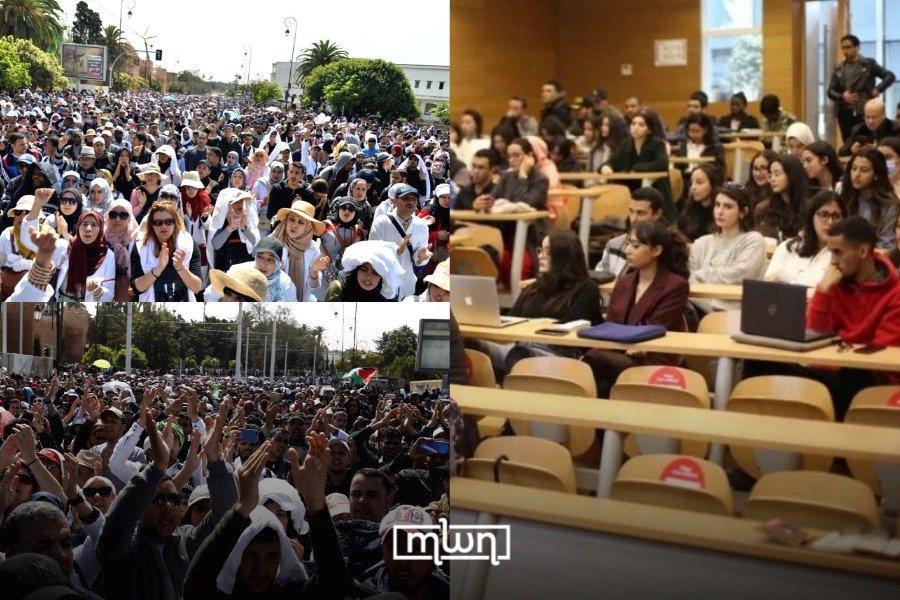
Rabat – 23-year-old “Brahim” is at Morocco’s average peak for opportunity. As a master’s student who teaches English speakers the Arabic language, he is relatively well-employed, well-paid, and well-educated—more stable than many fellow citizens. He has the money to dress nicely and own a motorcycle. He even lives in the well-connected, well-serviced municipalities outside of Rabat, meaning his family has access to private schools, functional hospitals, communications infrastructure, and basic goods and services.
Many Moroccans lack those things, so Brahim is fortunate. But even he plans to leave Morocco for better opportunities.
“I won’t find any opportunity in Morocco,” he says. “My country is not giving me any opportunity to stay here. If I stay in Morocco, I’m going to work as a teacher, teaching Arabic to Moroccans, in public school with the government, and I’m going to get MAD 7000 [roughly $700] a month. Do you think it’s enough?”
Today, like always, he drove his motorcycle to the school where he teaches Arabic learners. At this point in the conversation, his fingers drum on his bike helmet. He says, “If [young Moroccan students] stay here, they waste their time.”
His feelings are becoming increasingly common across Morocco. Each year thousands of the country’s most qualified young professionals—studying engineering, medicine, education, and other highly skilled fields—depart Morocco for hypothetically greener shores in Europe, the Gulf, and America.
This phenomenon is known as brain drain: The emigration of talents and qualifications from one country into the rest of the world.
The Moroccan government has looked on with concern as brain drain has accelerated over the past decade.
Continue Reading on Morocco World News
This preview shows approximately 15% of the article. Read the full story on the publisher's website to support quality journalism.