This article was featured in the One Story to Read Today newsletter. Sign up for it here.
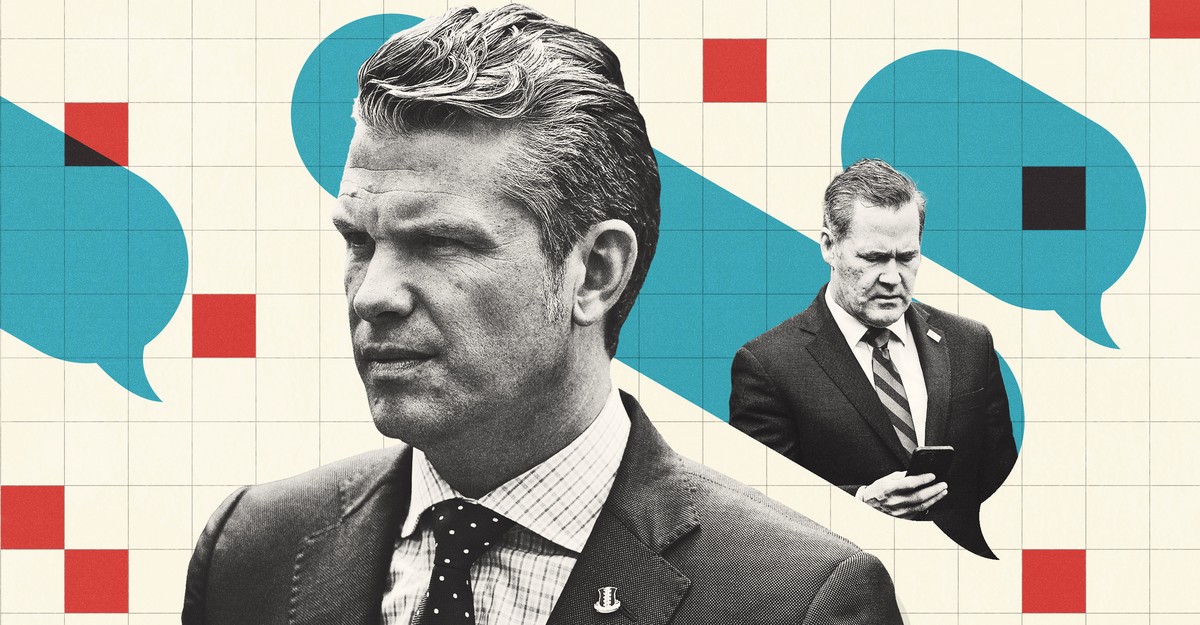
For nearly nine months, Trump-administration officials have defended top national-security leaders who shared information in a Signal chat about U.S. strikes in Yemen, first reported by The Atlantic’s editor in chief, Jeffrey Goldberg, who was inadvertently included in the group. Officials played down the severity of the breach and insisted that the information wasn’t classified.
Now the Pentagon’s top watchdog has concluded that the information Defense Secretary Pete Hegseth shared in the chat could have put the mission, U.S. personnel, and national security at risk had it fallen into the wrong hands. The information Hegseth shared included the precise times that fighter pilots would attack their targets, the sort of information ordinarily shared only on secure platforms. If Houthi militants had learned those details in advance, they might have been able to shoot down American planes or better defend their positions.
The Defense Department inspector general found that while the mission ultimately was not jeopardized, Hegseth violated his department’s own policies when he used Signal, a commercial messaging app that is not approved for sharing classified information. The IG’s report, scheduled to be published on Thursday, was described to us by numerous U.S. officials familiar with its findings.
The Pentagon and the White House did not immediately respond to a request for comment.
Continue Reading on The Atlantic
This preview shows approximately 15% of the article. Read the full story on the publisher's website to support quality journalism.