The country’s vast consumer base is the key to riding out Trump’s tariffs. But China’s internal market is riven by its own trade barriers.
In April, U.S. President Trump announced his so-called “Liberation Day,” slapping tariffs on nearly every country in the world. However, after Beijing retaliated, Trump made China his primary target.
China has been widely viewed as “well-prepared” for Trump’s full-scale tariff war. It did not come as a surprise; Chinese economic officials and scholars had been discussing the possibility of renewed China-U.S. trade tensions since Trump’s election victory in November 2024. Since Xi Jinping came to power in 2012, one of his top economic priorities has been to enhance the Chinese Communist Party’s capacity to control and lead the economy while strengthening China’s resilience to external shocks. The trade war during Trump’s first term, along with the COVID-19 pandemic, further accelerated China’s pivot away from reliance on international trade.
Xi’s strategy of economic self-strengthening – through technological nationalization and the promotion of “dual circulation” – has made China less vulnerable to foreign economic coercion. The dual circulation strategy, introduced by Xi in 2020, prioritizes domestic economic activity over international trade. The goal is to increase the resilience of China’s supply chains by reducing dependence on foreign technology.
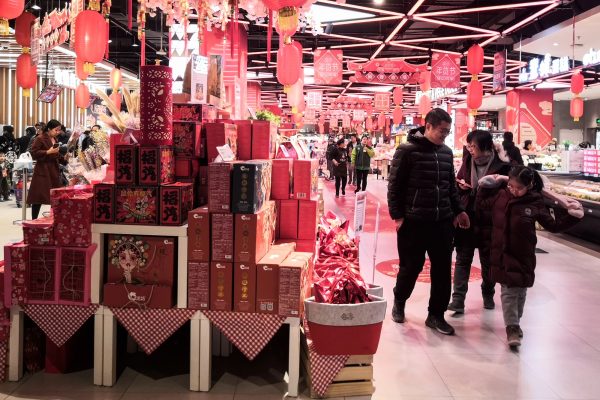
Xi’s confidence rests on his belief in the strength of China’s domestic market.
Continue Reading on The Diplomat
This preview shows approximately 15% of the article. Read the full story on the publisher's website to support quality journalism.