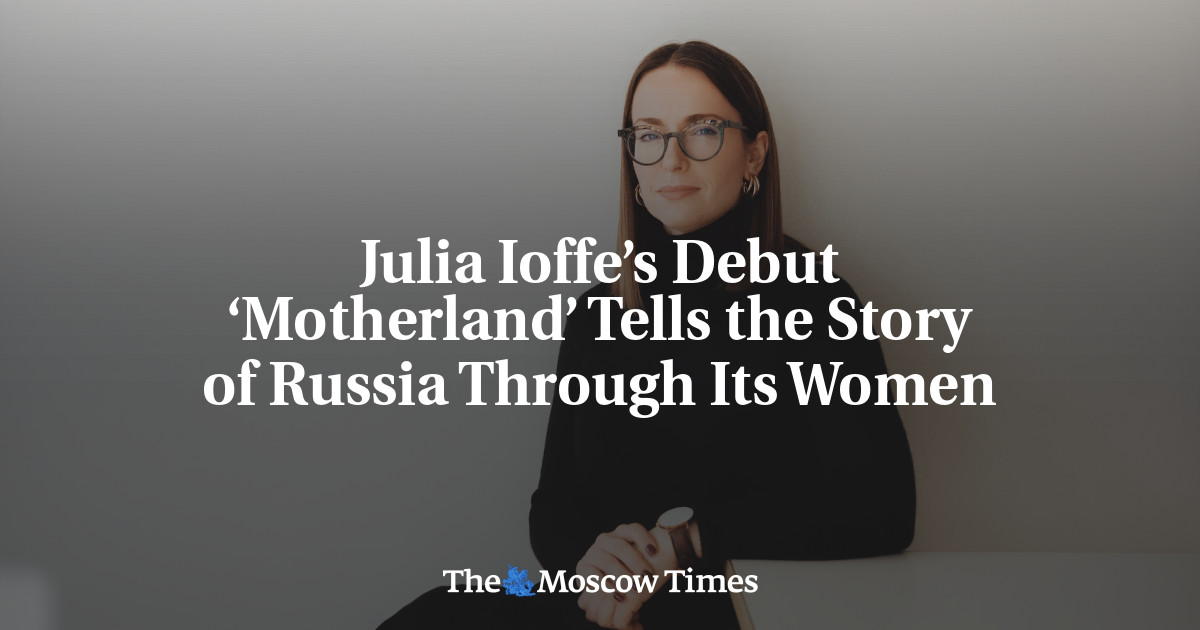
Julia Ioffe is an award-winning Russian-born American journalist and author specializing in Russia-U.S. relations and politics. Her debut book, “Motherland: A Feminist History of Modern Russia, From Revolution to Autocracy,” tells the story of Russia through its women: from Julia's physician great-grandmothers to feminist revolutionaries, from the single mothers who rebuilt the postwar U.S.S.R. to the members of Pussy Riot. We spoke with Julia about the experiences of women in the Soviet feminist experiment, the differences between Western and Russian feminism, the lessons we can learn from the women in “Motherland” and more.
PH: Your book is woven around the stories of women over the past 150 years of Russian history, including generations of your own family. Can you introduce us to some of them?
JI: All four of my great-grandmothers were born around 1900, which made them about 17 or 18 when the Revolution happened. They were the first generation to live through the revolution and all its reforms kicked in right as they were reaching adulthood. And they benefited from it tremendously.
They got access to free higher education, which had been closed to them both as women and as Jews, and as some of them being from poor families. This experiment in emancipating women radically transformed their lives. But it did so alongside all of the chaos and bloodletting and tragedy that the rest of the Soviet experiment also brought.
So I start with them, and then I go forward chronologically. The frame for the book came from Nina Khrushcheva, Nikita Khrushchev's great-granddaughter. She said that if you notice the fate of the women at the top, the women who were married to the leaders of the Soviet Union, that reflects the fate of the country more broadly.
Continue Reading on The Moscow Times
This preview shows approximately 15% of the article. Read the full story on the publisher's website to support quality journalism.