If you saw Martin Parr and didn’t know who he was, you would barely notice him. He is Mr Invisible and Mr Normal rolled into one, in his sensible jumper – probably from Marks & Spencer – and sensible socks and sandals. He has a neat side parting and neatly cut hair. He has a mild and conventional manner and a mild and conventional appearance. There is something of the naff birdwatcher about him. But do not be fooled. This is the disguise of a man who is seeing far more than most of us ever see, and he’s hiding in plain sight. He is a genius who has changed photography, one of the great artists of our time.
So who is Martin Parr? And what would he say if we listened? His life is, in many ways, an everyman’s life: he’s born into a family of mixed characters and classes; he has a devoted grandparent; he is undistinguished at school – perhaps not having the happiest of childhoods; he’s a silly boy; he goes to college; mucks around, tries new things, gets a girlfriend, has some holiday jobs. He enters adulthood in an inauspicious way, works hard, sees something of the world; gets married, becomes a father, builds up his career, travels; has conflict, success, illness, recovery; becomes a grandfather, gains wisdom and respect. An ordinary life that follows an ordinary arc.
Martin Parr’s life is also a life of its century. He was there in the great freeze of 1962 – he records it with his first photo. He’s a grammar school boy who trainspots the last steam engines, then a hippy student with long hair in the 70s. He’s in Ireland during the Troubles, then, in the 80s, he’s capturing fashion, luxury, consumerism and British Conservatism. He sees the fall of communism in the 90s, the rise of McDonald’s and the explosion in international tourism. In the new millennium, he watches India transforming, industry dying in the Black Country, the traditional English village enduring. He sees South Africa after apartheid and the growth in the standard of living worldwide. He lives through the arrival of digital photography, mobile phones, selfies. He sees Gay Pride marches and Black Lives Matter protests, meets the elderly queen and survives the pandemic.
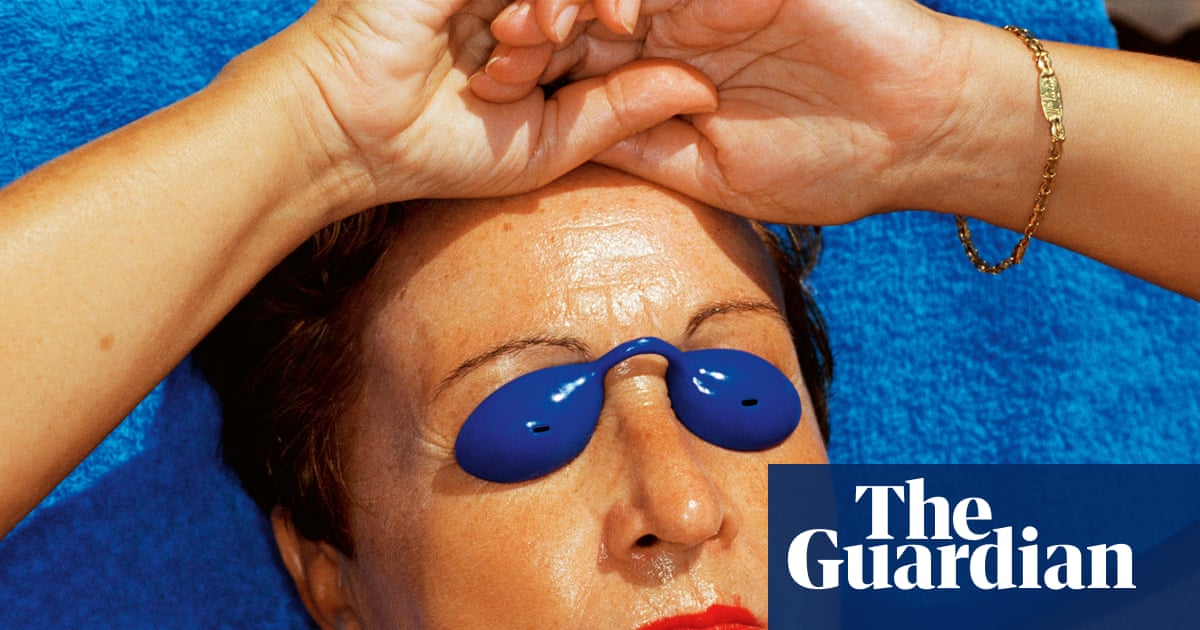
And he photographs it all. He’s like a photographic Forrest Gump. In the mid-80s, like the film of The Wizard of Oz, his work burst into colour, not in a wonderland like Oz but in a downtrodden, dirty, unglamorous seaside resort near Liverpool called New Brighton. He photographed gulls, litter, sunbathers on cement walkways, babies crying and chip shops. Not for him the luscious aesthetic of 1930s seaside posters. This was a working-class day out, and Martin displayed it in vibrant, flash-induced, saturated colour. In New Brighton, Martin became the photographer we know him to be now – vivid, demanding our attention, socially aware and pulling us in like a magnet.
Many years ago, I approached Martin and asked if I could write his biography. He said yes. We tried, we failed. I asked questions; he replied quickly and briskly. I asked the same questions again, I tried to dig deeper. I failed. I wanted to write something analytical, deep, full of myth, id and ego. Martin talked about birdwatching and regularly said the worst phrase a biographer can hear: “That’s all I’ve got to say about that.” How could I write a book with so few words? I couldn’t.
Continue Reading on The Guardian
This preview shows approximately 15% of the article. Read the full story on the publisher's website to support quality journalism.