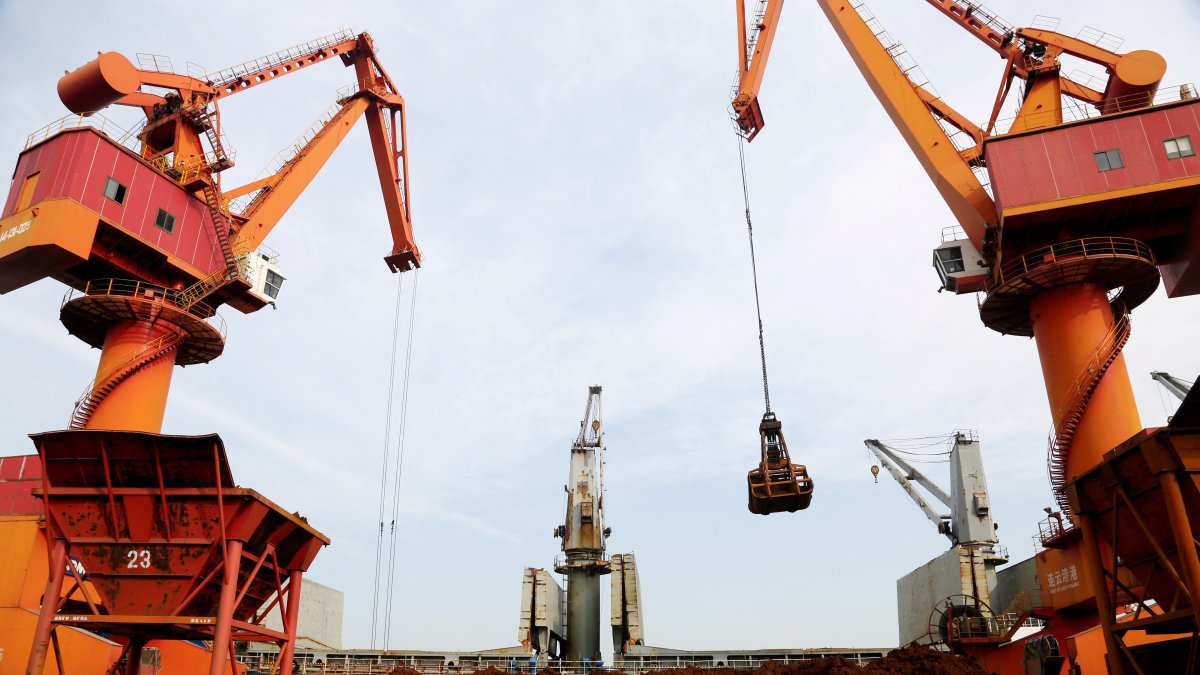
As global supply chains shift from Russia-dependent routes and congested maritime points, the Middle Corridor – stretching from China to Europe via Central Asia and Türkiye – is emerging as a major Eurasian trade link, strengthening Türkiye’s role as a central hub connecting East and West.
The corridor spans from China’s Lianyungang province through Kazakhstan, across the Caspian Sea, Azerbaijan and Georgia, before reaching Türkiye. It is increasingly seen as an alternative to Russia-dependent routes and traditional maritime pathways, which face rising costs and security pressures.
Institutional coordination accelerated after a 2013 agreement among Kazakhstan, Azerbaijan and Georgia, with China later joining the framework. The completion of the Trans-Kazakhstan railway and the 2017 launch of the Baku-Tbilisi-Kars (BTK) line enabled uninterrupted rail travel from China to Europe.
Meanwhile, the long-discussed Zangezur Corridor, linking mainland Azerbaijan to Nakhchivan via Armenia, remains under negotiation but could further streamline trans-Caspian connectivity into Türkiye.
Freight volumes surge as transit times fall
A Boston Consulting Group (BCG) report released in November noted that global trade lanes are being restructured amid rising Suez Canal risks and geopolitical pressures on Russia-based routes.
Cargo volumes transported thro
Continue Reading on Daily Sabah
This preview shows approximately 15% of the article. Read the full story on the publisher's website to support quality journalism.