With the election slated for Feb 8, the private sector is concerned about governance continuity, particularly the potential economic impact if government formation is delayed
Listen to this article
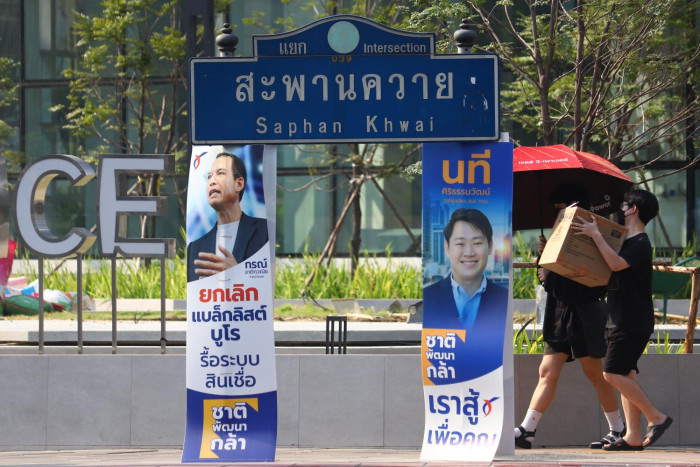
Election posters wrapped around poles at Saphan Khwai intersection. If government formation is delayed by three months, an analyst predicts subdued economic growth in the first quarter of 2026. Nutthawat Wicheanbut
Thailand's political scene has regained momentum over the past week after the Election Commission announced Feb 8 as the date for the next general election, with several factions hopeful they can shape the country's future through a new government.
Political parties have been unveiling their prime ministerial nominees along with a slate of parliamentary candidates. However, the business sector remains concerned about governance continuity, particularly the potential economic impact if government formation is delayed, as was the case in 2023.
SWIFT FORMATION
Independent scholar Aat Pisanwanich said government formation should be expedited to within one month after the election to reduce the impact on GDP.
According to data from 2023 when a government was formed three months after the election, GDP declined by 1.8 percentage points.
Therefore, if government formation following the Feb 8 election is delayed by three months, GDP in the first quarter of 2026 could fall to 1.4%, compared with 3.2% in the first quarter of 2025, he said.
"The faster a government can be formed, the more beneficial it will be for the Thai economy be
Continue Reading on Bangkok Post
This preview shows approximately 15% of the article. Read the full story on the publisher's website to support quality journalism.