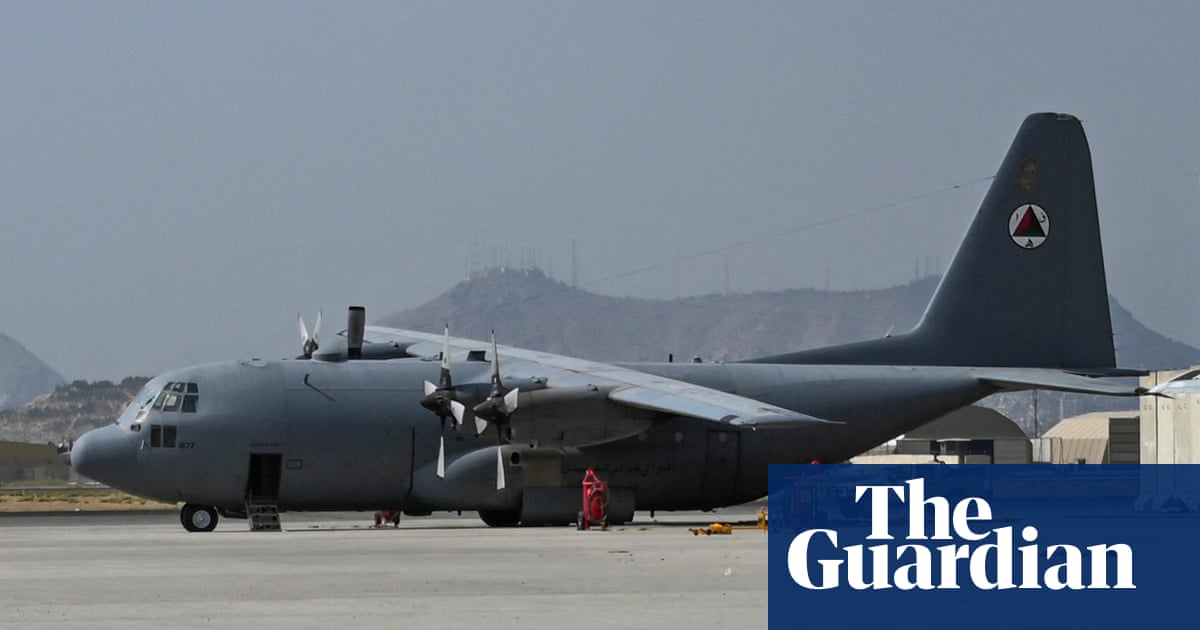
Ali was 25 and a pilot for the Afghan air force, just like his father before him; he arrived at the special mission wing 777 airbase in Kabul around 11am one day in August 2021.
The moment he stepped through the gates, he sensed something was wrong.
Kabul, in his mind, was untouchable. “I didn’t think it would reach Kabul,” he said in an interview by phone from his apartment in Boise, Idaho, recently.
“It” referred to the resurgence of the Taliban. The Guardian is using a pseudonym for Ali’s safety and that of his family.
He said: “The US had its embassy there. There were so many Americans.”
But the scene at the base that morning looked nothing like the one he knew. Pilots sprinted between hangars, stuffing bags and shouting orders. Routines that once gave structure to their days had collapsed.
Ali ran toward the command center, adrenaline rising, he recalled, as he tried to understand what was unfolding.
For weeks, he had felt the political ground shifting. “Our American mentors had told us to stop bombing the Taliban,” he said. “That was unusual.” Apparently, airstrikes had ceased, so Ali was focusing on intelligence work.
On 15 August 2021, the truth finally landed. Kabul was falling. It was no longer a question of whether control of the capital of Afghanistan would change hands but how quickly.
“They told me I had two choices,” he recalled of his superiors. “Get on a US air force C-17 evacuating civilians, or fly my plane out of the country.”
Ali didn’t hesitate. He had been flying alongside American forces since he was 19, convinced Afghanistan could still become a place where his young
Continue Reading on The Guardian
This preview shows approximately 15% of the article. Read the full story on the publisher's website to support quality journalism.