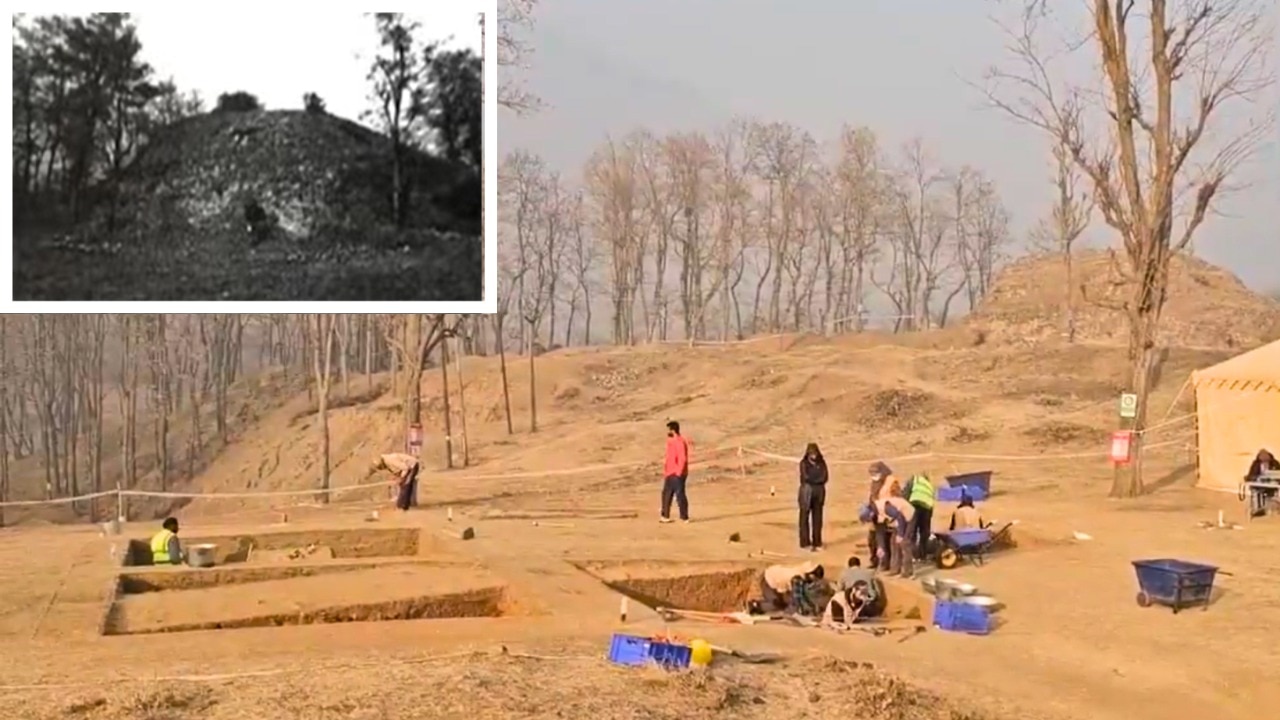
Sandwiched between apple orchards and paddy fields, in a valley along the Jhelum, stood several mounds that had long stirred curiosity among locals of Zehanpora village. Over the years, archaeologists from Srinagar and Delhi visited the village in Baramulla district of Jammu and Kashmir. They conducted surveys and formed assumptions about the unremarkable-looking mounds.
When archaeologists began a systematic study of the mounds, which are located along an ancient Silk Route leading to Kandahar and beyond, and deployed drone surveys, aerial photography and mapping, it became clear that they were part of an ancient structure. Around the same time, thousands of kilometres away, three old, blurred photographs surfaced in the archives of a museum in France.
advertisement
"Three Buddhist stupas were visible in that photograph of Baramulla. From there, the course of discovery changed, and Kashmir's forgotten past began to reveal itself. This history goes back nearly 2,000 years," according to Prime Minister Narendra Modi's latest Mann Ki Baat address on Sunday.
Zehanpora has yielded Buddhist stupas, an urban settlement complex(could be chaityas and
Continue Reading on India Today
This preview shows approximately 15% of the article. Read the full story on the publisher's website to support quality journalism.