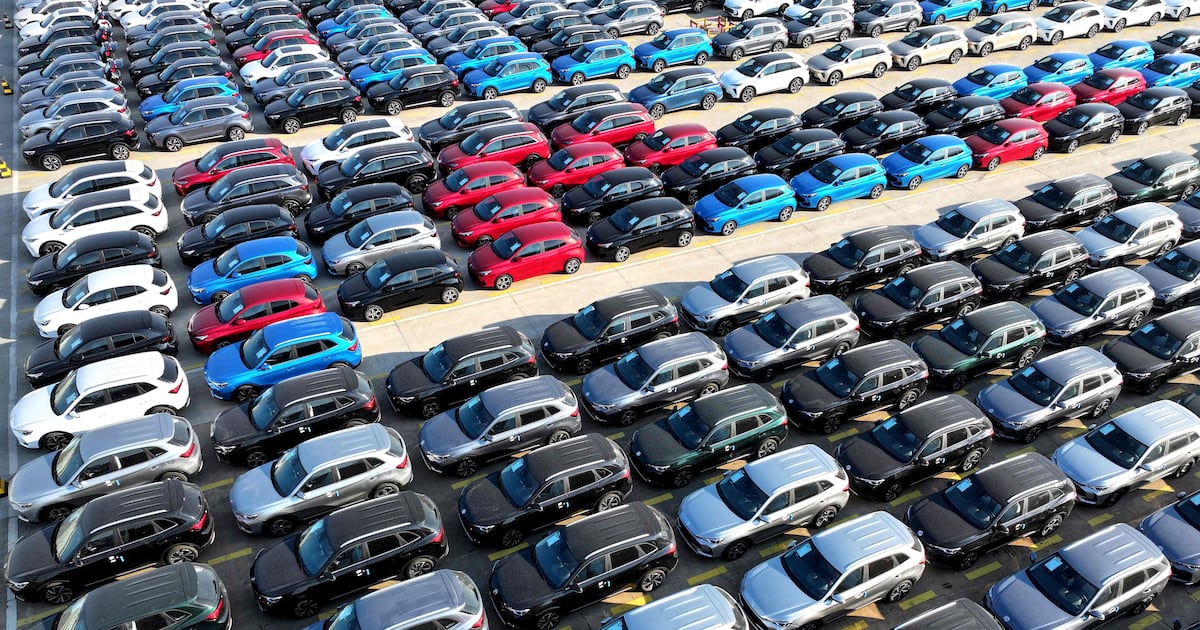
China’s export-driven economic model is sharpening a trade-off western policymakers know all too well: shielding domestic industry usually comes at the cost of higher prices. Politicians face an uncomfortable choice: disappoint voters worried about living costs, or industries squeezed by low-priced Chinese goods.
But the constraints are not the same across the West. Europe’s exposure to China is deeper, and firms and households are still dealing with the legacy of higher energy prices after Russia’s invasion of Ukraine.
The US has responded bluntly − relying on high tariffs, alongside restrictions in selected sectors. Europe, by contrast, is more divided over how far to go in response to Chinese competition.
France, for one, has called for a “Made in Europe” approach, with President Emmanuel Macron arguing for a tougher line on Chinese exports – which he recently said were becoming “unbearable” for European industry.
'Steady but fragile world' as tariffs bite, says IMF 01:56
Tariff redirection
US tariffs were expected to redirect Chinese exports towards Europe, and in some industries that pressure on local producers is now evident, particularly in textiles and steel. With domestic consumption subdued, Chinese firms have increasingly turned to foreign markets − notably Africa and South-East Asia. Even so, calls in Europe for a more protective response are growing.
The Made in Europe targets, which would require up to 70 per cent local content for some products like cars, risk adding more than €10 billion ($11.8 billion) a year in higher costs but for limited industrial gain.
The wider danger for western policymakers is that blocking Chinese exports through tariffs or quotas risks reinforcing inflationary pressure, just as price pressures have eased but not disappeared.
If the West raised further barriers to trade with China, prices would almost certainly rise at first, as production would shift to higher-cost producers in Europe and the US.
Analysts have, for e
Continue Reading on The National UAE
This preview shows approximately 15% of the article. Read the full story on the publisher's website to support quality journalism.