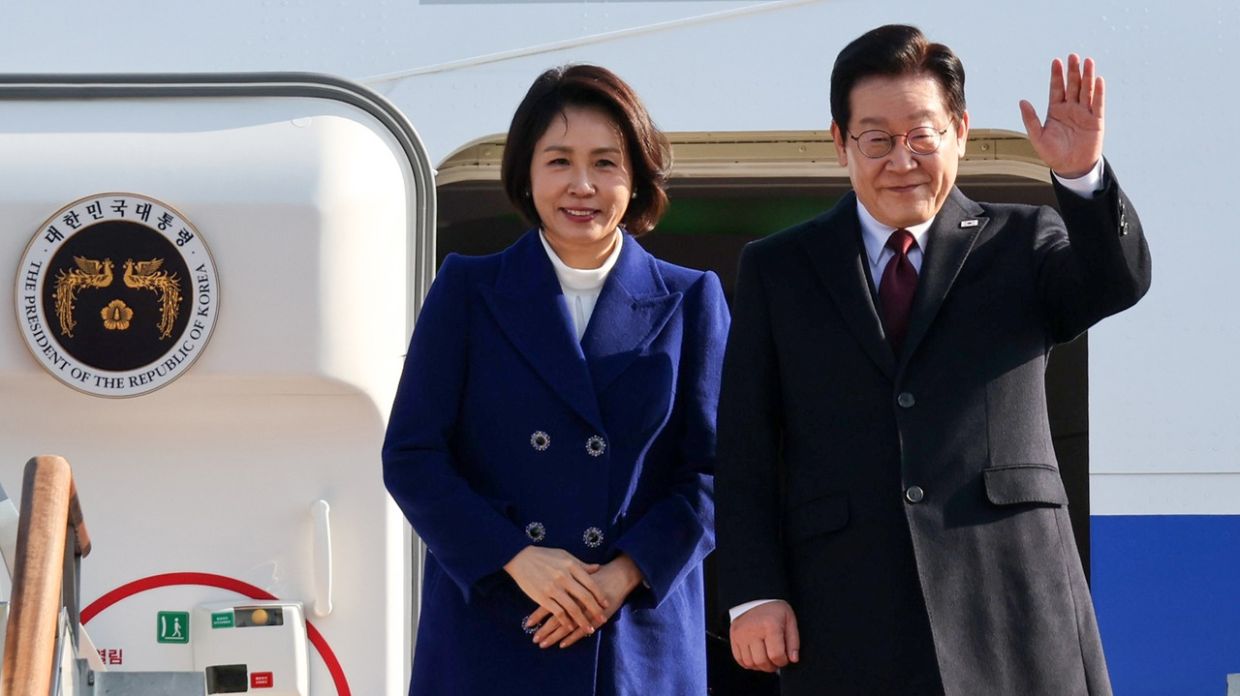
SEOUL: President Lee Jae Myung’s four-day state visit to China is less a deal-making summit than an exploration of how Seoul and Beijing can steady their relationship under the growing constraints of US-China strategic competition and an increasingly volatile regional security landscape.
The trip, which began Sunday (Jan 4), carries a twin imperative, observers say. One is to keep high-stakes flashpoints from hijacking the relationship — as the 2017 THAAD deployment did.
The other, equally critical imperative is to carve out lanes of economic cooperation durable enough to withstand strategic pressure, alongside cultural and people-to-people exchanges that can shore up the fragile foundations of bilateral ties.
In Beijing on Monday, Lee’s agenda with President Xi Jinping will be shaped less by easy deliverables than by the region’s hard-security flashpoints. Pyongyang’s apparent ballistic missile launches hours before Lee’s departure only sharpened the backdrop.
Seoul’s effort to enlist China in its efforts to curb North Korea’s missile and nuclear program is expected to feature prominently, alongside the Taiwan issue, the modernisation of the Korea-US alliance, Seoul’s push for nuclear-powered submarines, and Beijing’s contested structures in the West Sea.
The timing of the meeting, the second in less than three months, suggests both sides see value in restoring a leader-level rhythm, but timing cuts against Seoul, tightening the constraints on an already delicate balancing act.
As China-Japan tensions over Taiwan rises, sharpened by remarks from Prime Minister Sanae Takaichi on potential military mobilization, Beijing has already begun stepping up pressure on Seoul.
In its readout of a phone call between South Ko
Continue Reading on The Star Malaysia
This preview shows approximately 15% of the article. Read the full story on the publisher's website to support quality journalism.