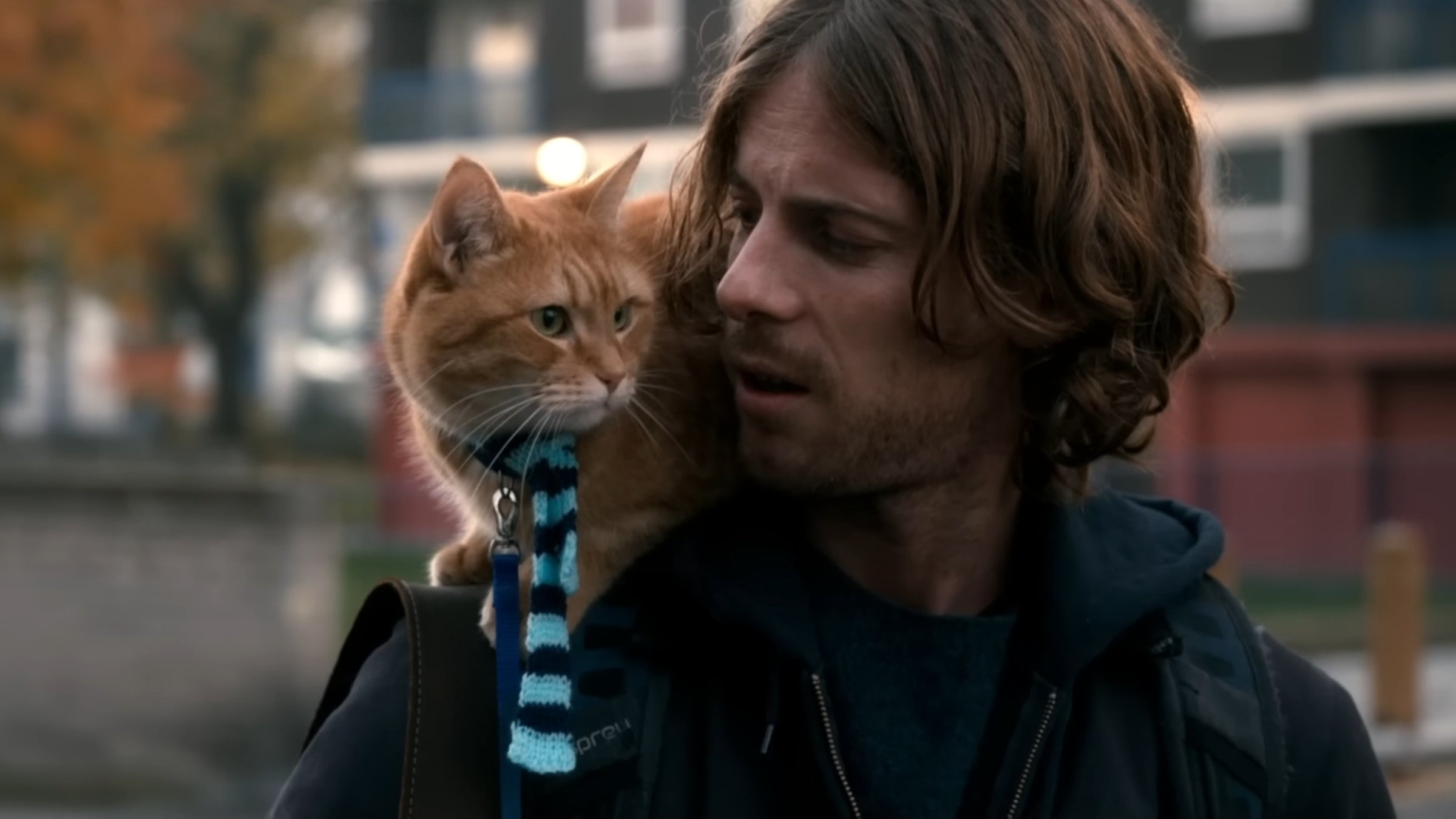
Directed by Roger Spottiswoode, this film tells the true story of how an injured and ill street cat named Bob “adopts” James Bowen (Luke Treadaway), a homeless man struggling with substance addiction and profoundly transforms his life. Through James’s story, the film reflects the loneliness of a cold, merciless London and how that loneliness is quietly reshaped.
Cities do not merely hide some people. They slowly erase them. "A Street Cat Named Bob" tells the story of a man standing at the very center of this erasure, someone who is reshaped not only to keep himself alive, but to keep his silent companion alive as well. James Bowen is less a protagonist than a pendulum suspended in time: worn down by rain, muffled by noise, ignored by crowds that refuse to acknowledge his flesh, his bones and worst of all, his soul.
Bowen’s life is woven more from repetition than meaning. Days relentlessly chase one another, nights challenge the dawn, the body works while the mind never quite returns home. In truth, that home does not fully exist anymore.
This repetition consumes existence to its very end, until Bob enters the scene. The cat’s arrival is more than a turning point. It is like the gentle seepage of sunlight through a crack in life, a sweet ache felt on the skin. Bob is a silent being who enters through a fractured place in existence. He makes no grand speeches, offers no promises, does not guarantee salvation. He does not rage, harbor resentment, destroy, or shatter things. He is simply there.
Continue Reading on Daily Sabah
This preview shows approximately 15% of the article. Read the full story on the publisher's website to support quality journalism.