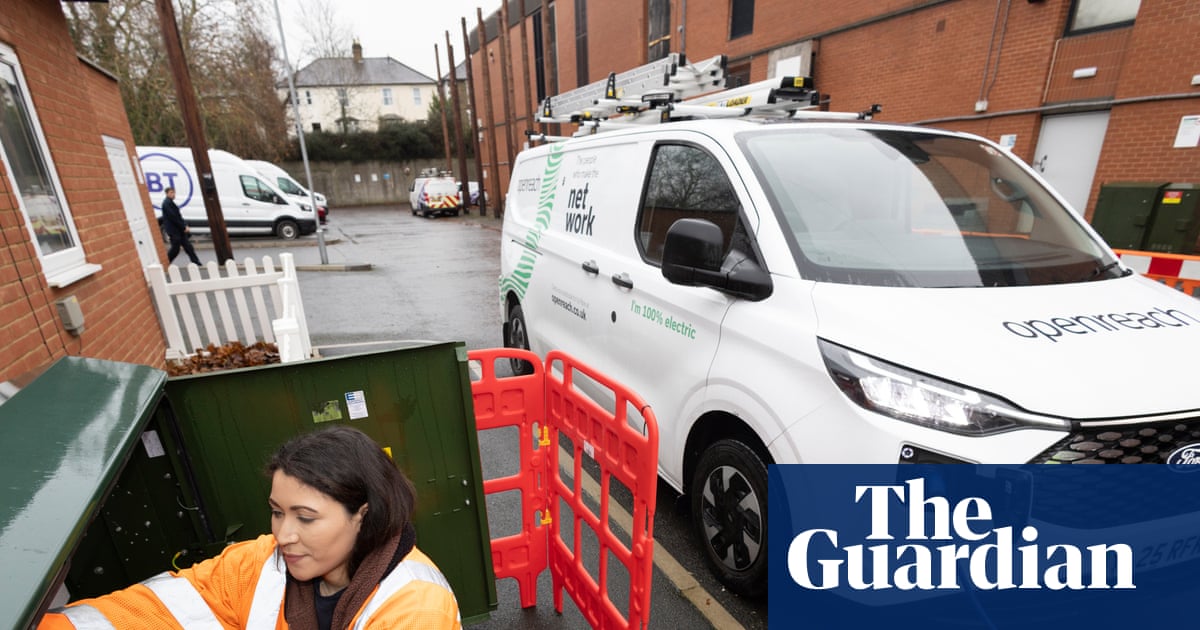
Swinging a fully laden electric van around a training centre in Bishop’s Stortford feels easy, with instant acceleration that belies the racks of heavy equipment in the back. Perhaps too easy, as the sudden shriek of its proximity sensor suggests the Guardian was a whisker away from a bill for some new paintwork.
The van in question belongs to Openreach, BT’s fibre broadband subsidiary. It is one of 6,000 electric vans out of 23,400 in Britain’s second-largest commercial fleet – and a further 1,000 are expected to be added by March.
The shift away from polluting diesel engines to electric will play a crucial role in the UK’s efforts to cut carbon emissions from vans – which were last recorded at 18m tonnes or 12% of all transport emissions in 2023.
Yet while the transition is moving forward for some of the biggest fleets, on a UK-wide level electric van sales have lagged behind expectations. For the white van, it has not been so easy being green.
On the face of it, electric van sales are behind government sales targets, known as the zero-emission vehicle (ZEV) mandate – echoing the situation for car sales. In 2025, the headline target was for 16% of new vans sold in Great Britain to be electric. Manufacturers only managed 9.5%, while struggling with an overall van market that slumped by 10%, according to figures published this w
Continue Reading on The Guardian
This preview shows approximately 15% of the article. Read the full story on the publisher's website to support quality journalism.