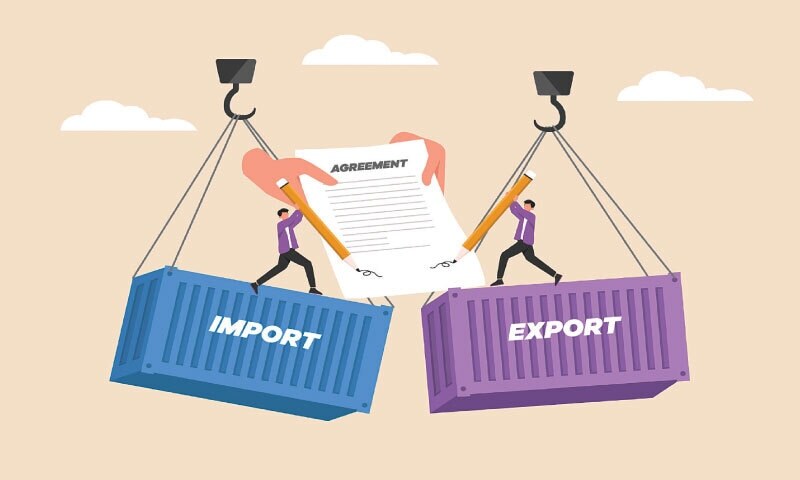
Trade agreements should not be viewed as a symbol of success; rather, they are a crucial component of industrial policy. Unfortunately, Pakistan has often approached market access with insufficient care. The prevailing perception equates the signing of trade agreements with economic achievement, but this is a misjudgment.
Trade agreements serve their purpose only when they enhance access to markets for products that the exporting country can produce competitively and for which there is clear demand in the importing country.
In Pakistan’s case, the absence of comparative advantage has led to underperforming agreements. While Pakistan has opened its markets quickly to imports, the resulting export growth has been modest, frequently limited to basic commodities like raw cotton — products that ideally should be processed into higher-value items domestically. Early export gains have also been eroded as major partners, such as China, extend more favourable terms to trading blocs like the Association of Southeast Asian Nations (Asean).
Trade agreements reward countries with existing competitiveness;
Continue Reading on Dawn
This preview shows approximately 15% of the article. Read the full story on the publisher's website to support quality journalism.