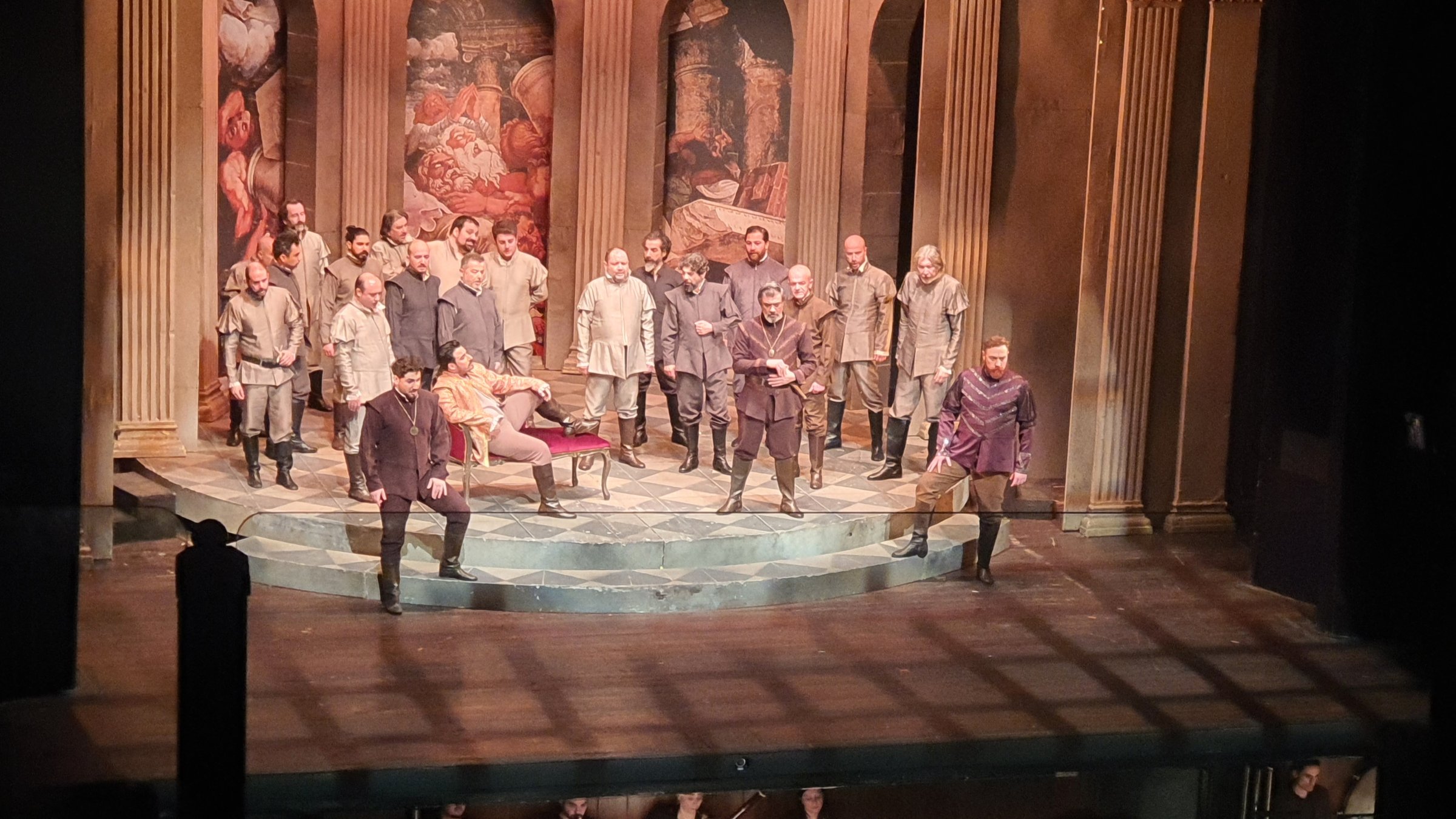
When I arrived in Mersin, one of Türkiye’s beautiful southern cities, the sea was calm and the sky overcast. Inside me, however, the orchestra’s opening chord had already begun to sound. After a quiet walk along the waterfront, I made my way to the cultural center on Jan. 24 to attend a performance of Rigoletto, a masterpiece by Giuseppe Verdi, one of the 19th century’s most celebrated Italian composers.
Rigoletto marks the beginning of Verdi’s mature period and stands as the first major pillar of the core trilogy later completed by “Il trovatore” and “La traviata,” works that shaped the modern operatic repertoire. As I entered the opera house, questions weighed on my mind. In this serene southern city, with its limited resources, would the artists be able to present a composition that truly served the work? When I failed to find a printed cast list in the foyer, my enthusiasm for attending opera in Mersin met its first disappointment.
Once the opening gong sounded, the orchestra began with a flexible yet coherent tempo, offering a guiding musical framework for the evening. The director’s grasp of the narrative further gave me hope. In a work where drama and music are so tightly interwoven, I found myself forming impressions (both positive and negative) regarding vocal technique and role construction. All in all, it was an experience marked by strong contrasts.
It is appropriate to begin with Caner Akgün in the title role. Musically, Akgün appeared well prepared; however, the fierce, seat-gripping outbursts expected of Rigoletto were largely absent from his lyric baritone.
Continue Reading on Daily Sabah
This preview shows approximately 15% of the article. Read the full story on the publisher's website to support quality journalism.